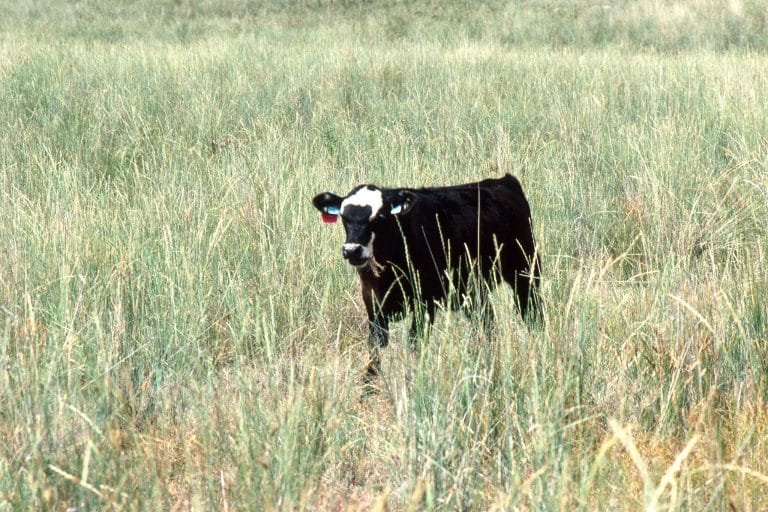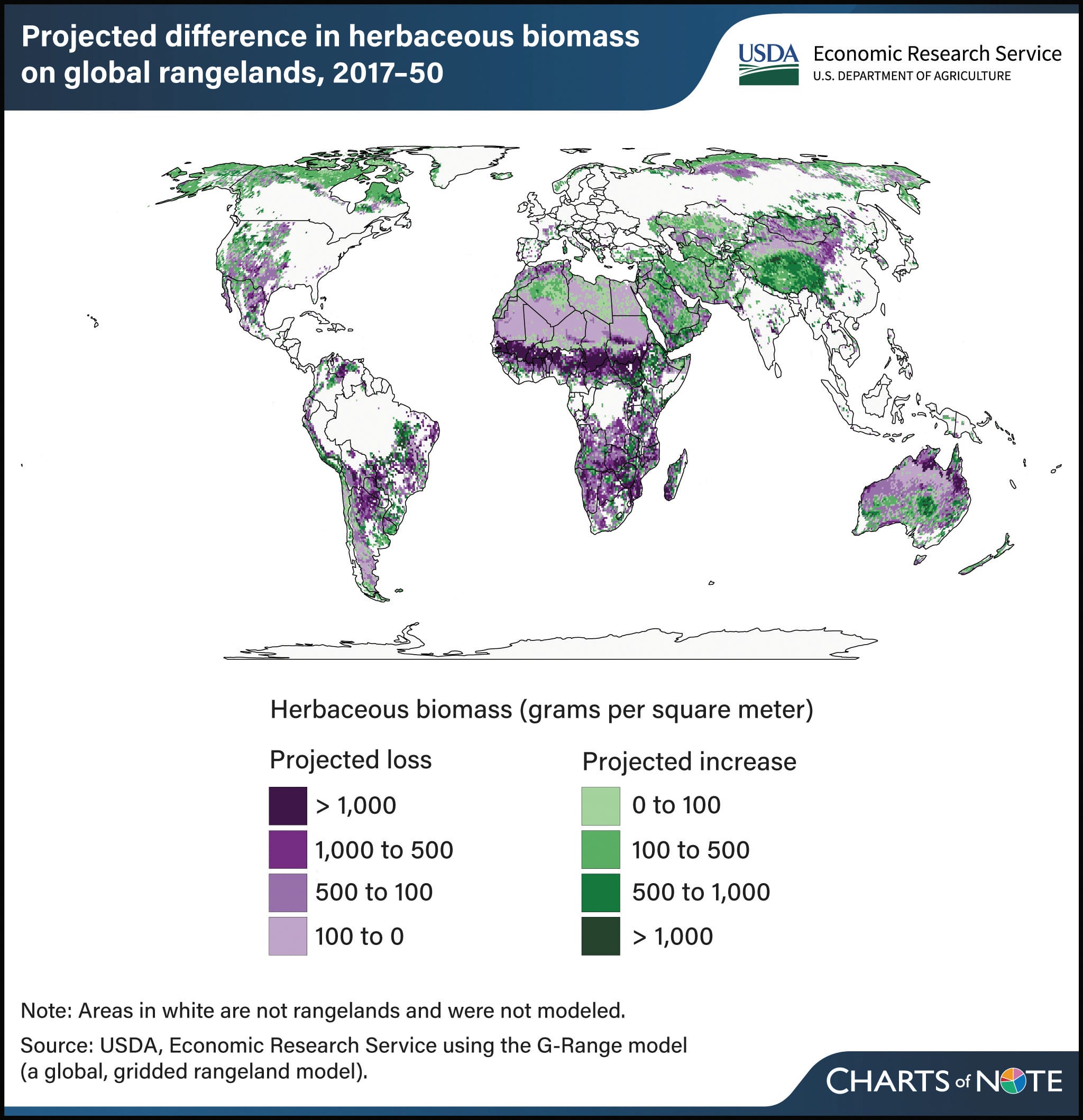
Around the globe, cattle graze on rangelands that grow herbaceous biomass consisting of grass and other grasslike plants. The USDA Economic Research Service (ERS) researchers used the gridded G-Range model to simulate the effect of shifts in temperature and precipitation on forage availability for cattle through 2050.
They found that as temperatures rise and rainfall patterns change, the quantity of herbaceous biomass available to cattle for grazing is forecast to change. Globally, herbaceous biomass is estimated to decline by about 4% by 2050, although model results vary widely by region.
Areas of higher latitudes and elevations with cooler climates are predicted to generally gain biomass over time, while areas of warmer climates are expected to lose biomass. North America is estimated to gain 15% more herbaceous biomass, with larger gains in Canada than in the U.S.
In the U.S., most rangeland areas are in the western half of the country where areas showed a predicted mix of gains and losses, leading to an average net gain of 3% herbaceous biomass.
Regions where the herbaceous biomass losses are predicted to be the largest tended to be concentrated in Africa. West Africa, for instance, was expected to lose up to 34% of its herbaceous biomass by 2050. — USDA ERS