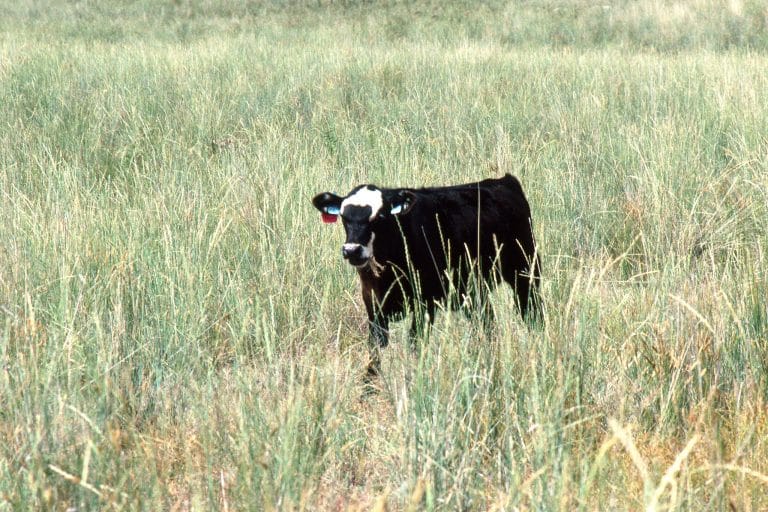
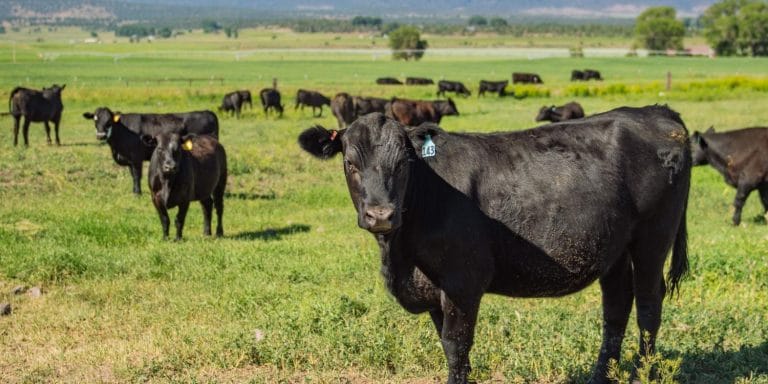
The price at an auction market is the market’s estimate of what a calf is worth that day, based on the information buyers can see and trust. There are no real visual indications of the calf’s genetic potential for growth, feed efficiency or carcass value. Calves sired by proven sires may have the potential for high rates of gain, improved feed efficiency and exceptional marbling and carcass quality.
However, if the calf is sold at weaning, there is no way for the cow-calf producer to capture that potential value unless they take steps to market their genetics.
A two-year comparison makes this point exceptionally well. In this example, calves were sired by an Angus bull either by artificial insemination (AI) from top bulls in the breed or natural service clean-up bulls purchased from reputable Angus seedstock producers.
Calves produced through timed AI were 69 pounds heavier at weaning than natural-service calves, but much of that difference came from being born earlier. The adjusted 205-day weaning weights for AI-sired calves were only 9 lbs. heavier than calves from natural service sires. As ownership continued, however, differences in performance associated with genetics became greater.
AI-sired steers were 109 lbs. heavier as long yearlings after grazing wheat pasture. During finishing, the AI-sired steers gained faster (3.74 lbs. versus 3.56 lbs. per day) and produced 50-lb. heavier carcasses. The analysis estimated $150/head greater net return from the AI-sired steers, including $82 less feed, using prices and costs from that time.
Recent Oklahoma State University (OSU) research underscores why “true value” must be defined carefully. Steers that were sired by bull selected for high growth based on yearling weight EPDs had the same weaning weight as moderate-growth contemporaries. By harvest, high-growth steers were 73 lbs. heavier, produced 26 lbs. more hot carcass weight and reached harvest seven days sooner.
However, they also ate more feed and had lower feed efficiency. Moderate-growth steers tended to produce more USDA Prime quality grade carcasses. Selection for growth added productivity, but it did not produce universal superiority in feed efficiency or carcass quality.
To get our calves’ full value, we first must create value by early castration and dehorning, a sound health program and nutrition that allows genetics to be expressed. Second, capture value by marketing uniform groups, documenting genetics and management. Finally, choose an marketing outlet where buyers value superior genetics or retaining ownership when feed resources, health, finances, risk tolerance and the market outlook justify it.
Retained ownership reveals calves’ real value, to benefit from it you need to know where the value of your calves is, prove it and sell where buyers recognize it. — Paul Beck, Oklahoma State University Department of Animal and Food Sciences