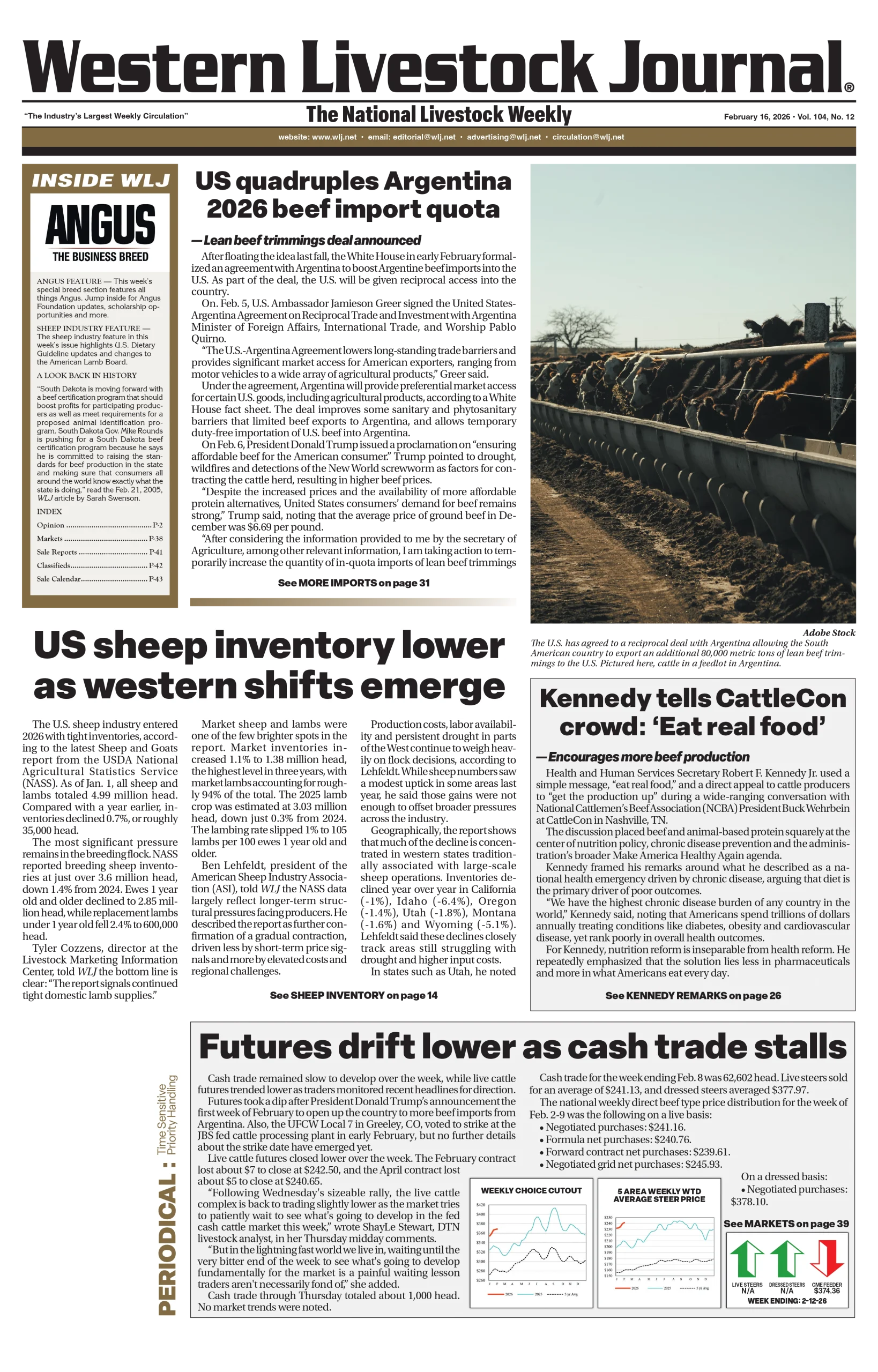
Winter has arrived. Hopefully all your cows are at a body condition score (BCS) of 5 or better. When this is the case, cows can remain comfortable at temperatures in the 20-30 F range as long as it is dry with little wind. Adequate BCS means cows have adequate fat reserves to provide some insulation and to be used as an energy reserve. Severe cold, wet and windy conditions will drive up the nutritional requirements of your cow herd.
Relative to nutrition, keep the following in mind during severe wintry weather:
1. As a general rule of thumb, for each 1 degree the average daily temperature is below 30 F, a cow in moderate BCS will need an additional 1% in daily energy requirement. For example, if the average daily temperature is 10 F, a cow will need approximately 20% more energy. If the cow needs 10 pounds of total digestible nutrients per day during normal weather, this requirement will increase to approximately 12 lbs. per day.
2. Wind chill and wet hair coats should be accounted for in determining daily energy needs. Cattle in thin condition, with wet hair coats and under windy conditions may not be able to produce enough heat to stay warm. The Mesonet Cattle Comfort Advisor is an excellent resource to monitor cold stress.
3. When additional supplemental feed is needed for cows on roughage diets, use feedstuffs which are high in digestible fiber and energy dense. For example, soybean hulls and distillers grains fit this criteria.
4. Windbreaks and shelter can be a huge benefit to reduce cold stress. Bedding to create a dry place to lie down can aid to reduce the stress of frozen ground.
5. If calving during severe cold, take extra precautions. Frozen ground and severe cold, windy weather pose an immediate threat to newborns. Be there to provide immediate assistance and a warm, dry environment for newborn calves. — Mark Z. Johnson, Oklahoma State University Extension beef cattle breeding specialist