All too often, headlines detail wildfires with massive destruction and chaos. There are simply too many headlines using phrases like “largest in history” or “most destructive on record” that seem to happen around every season. In places like California, where there are efforts for grazing and logging to be eradicated, or in areas where neither option is available but population continues to expand, massive fires have erupted, creating mass destruction of towns and causing billions of dollars of damage.
This idea just doesn’t seem plausible, but it happens more and more frequently. Throughout history, there are stories told of fires claiming townships. This would often make sense to me as a child. Complete towns built of dried wood with little-to-no way to deliver a high-pressure water source. It makes sense. But today? It doesn’t seem that it should be a reality, yet it is.
This isn’t a column about global warming. I have my stance there, but this isn’t the column to expand on that. What is fact is that this winter has been drier and warmer. Weather patterns and ocean currents have created a La Niña pattern that is quickly fading in 2026, and several factors fell perfectly into place for Nebraska to be dealing with the largest fire on record. In the second week of March, a massive storm carrying a heat wave and high winds swept across the nation, starting on the West Coast and reaching all the way to the Plains.
This storm system helped to drop humidity and shock fuel sources, and a spark was all it took for a fire to explode. From there, embers were moving faster than any machine could. As one source told me, “The first time hot embers flew overhead and started a fire behind me, I thought I was going to die. But after it kept happening, I got used to it and just kept fighting the blaze.”
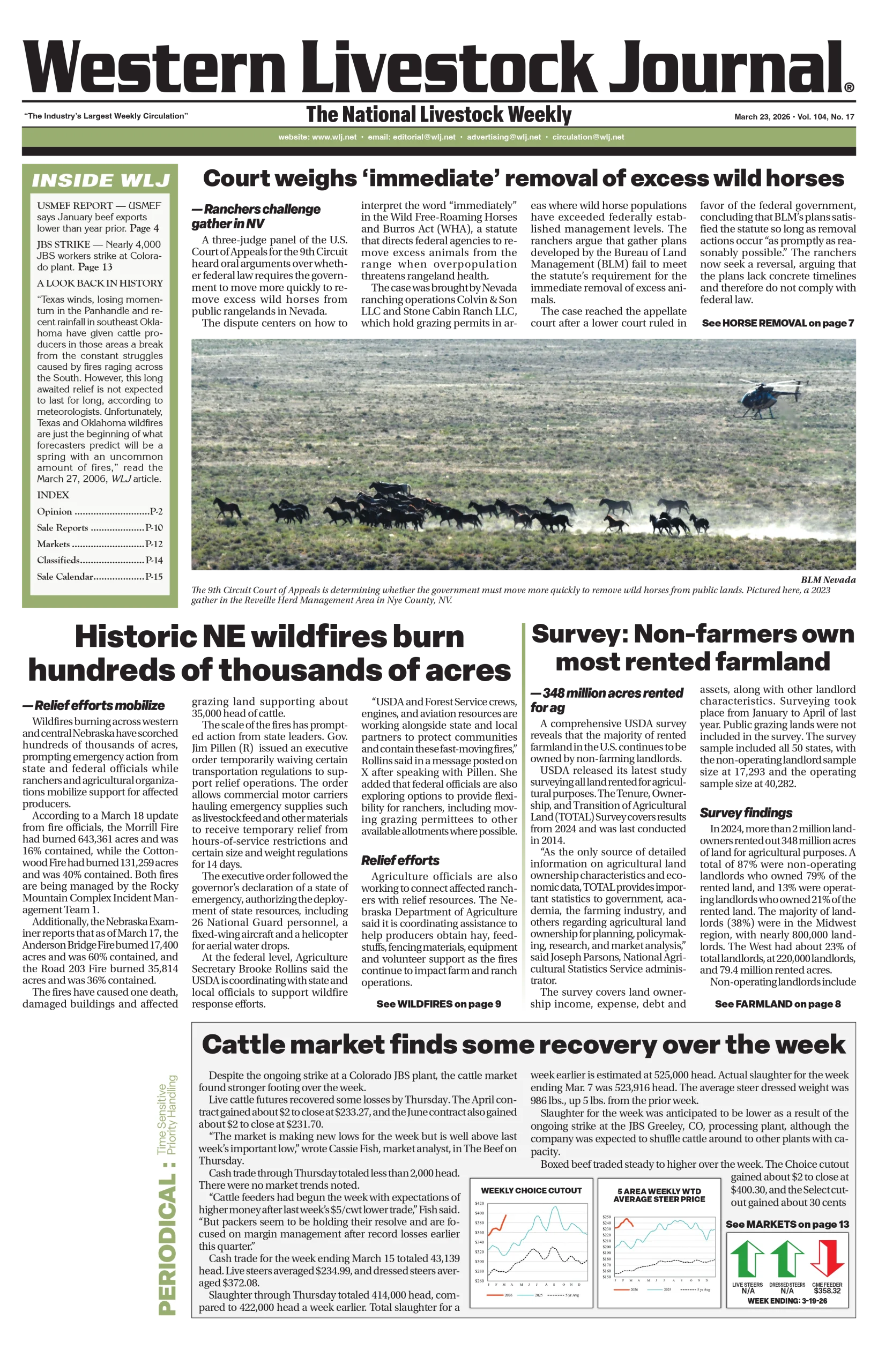
This led to Nebraska experiencing one of the most destructive wildfire outbreaks in its history, transforming vast stretches of prairie into scorched earth. What began as a series of grassfires quickly escalated into a statewide emergency, fueled by extreme weather conditions and difficult terrain. The scale of destruction has been staggering, with more than 800,000 acres burned from multiple fires as of the writing of this column, making this one of the largest wildfire events ever recorded in the state.
At the center of the devastation is the Morrill Fire, which alone has consumed over 650,000 acres across several counties in western Nebraska. Other major fires—including the Cottonwood Fire and Road 203 Fire—have added tens of thousands more acres to the total, overwhelming local and state resources. The fires spread with astonishing speed; in some cases, flames traveled more than 70 miles in less than a day, leaving little time for evacuation or defense. The sources of ignition vary, but early reports suggest a mix of human and infrastructure-related causes. Officials believe the Morrill Fire may have been sparked by electrical equipment, possibly downed or sparking power lines in high winds, though investigations are ongoing.
Vegetation also played a major role. Dry prairie grasses provided continuous fuel, while invasive species like cedar trees intensified the burn by releasing oils that increase flame intensity. Sources fighting the fire were quoted as being able to smell the oils burning. In this environment, fires didn’t just creep along the ground—they exploded across hillsides and through tree lines, making traditional firefighting methods less effective.
Another major challenge is Nebraska’s rural landscape. Much of the state relies on volunteer fire departments, which cover vast areas with limited resources. In remote regions, access to water, equipment and manpower can be scarce, slowing response times and allowing fires to grow before they can be contained. Even when reinforcements arrive, rapidly shifting weather conditions can undo hours of progress in minutes.
The destruction has been profound. Entire pastures have burned, homes and outbuildings have been lost, and at least one life has been claimed. For ranchers, the loss of grazing land, fencing and livestock represents not just economic hardship, but a deep personal blow tied to generations of work and stewardship.
As I’ve been in contact with people who have witnessed the destruction or have direct connections to those who have, the stories are starting to come out about having to drive pickups through a fire line just to survive, or neighbors dropping everything to go help, or volunteer fire departments from neighboring states packing up and heading to fight fires. Human resiliency, support and care always come to the forefront. It’s humbling to see how people come together to help each other in times of need. God bless those who put down their own agenda to go help neighbors and complete strangers.
Ironically, while this is all happening, southern Canada and the northern states were dealing with blizzard conditions and dealing with their own set of problems Mother Nature decided to hammer down during the later part of March.
Ultimately, the Nebraska wildfires of 2026 highlight a changing reality for the Great Plains. No longer rare events, these large-scale fires are becoming more frequent and more intense. Driven by drought, wind and human activity, they represent a growing threat to rural communities. The destruction seen across Nebraska is not just a single disaster—it is a warning of what may lie ahead if conditions continue to worsen. — LOGAN IPSEN