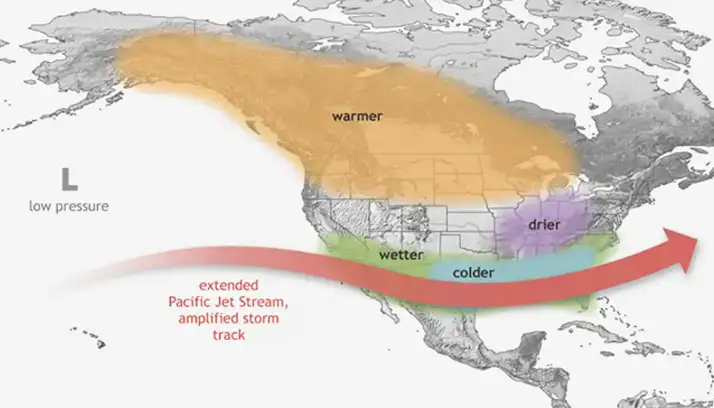
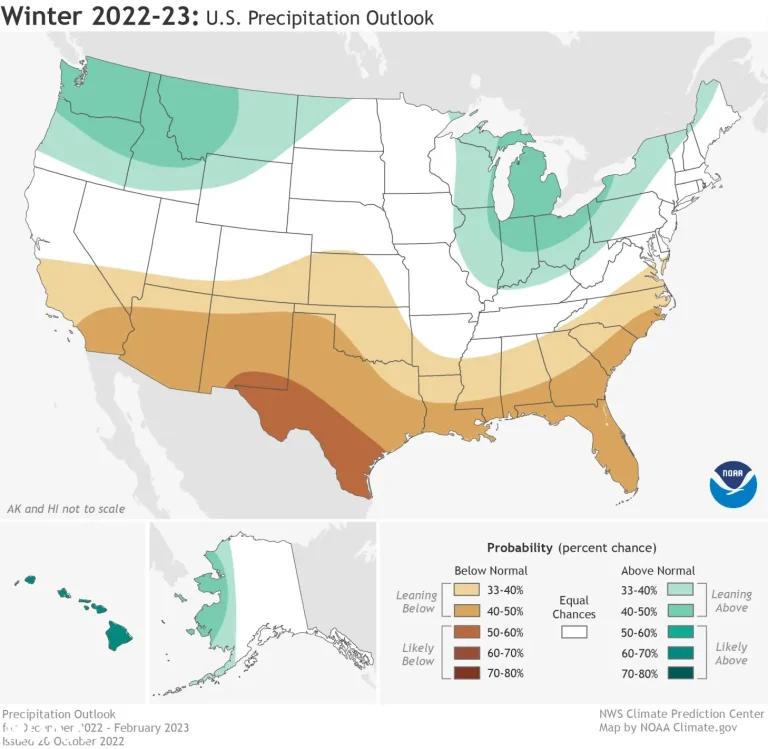
The National Weather Service Climate Prediction Service said La Niña conditions strengthened over the past month, with cooler-than-normal sea surface temperatures across the central and eastern Pacific and continued signs in the atmosphere.
Models suggest La Niña will likely continue from December through February, though uncertainty remains high. A weak La Niña means its typical winter impacts may be less pronounced. Forecasters say there is a 61% chance conditions will shift to El Niño-Southern Oscillation-neutral sometime between January and March 2026, marking a gradual return to more typical Pacific weather patterns.