
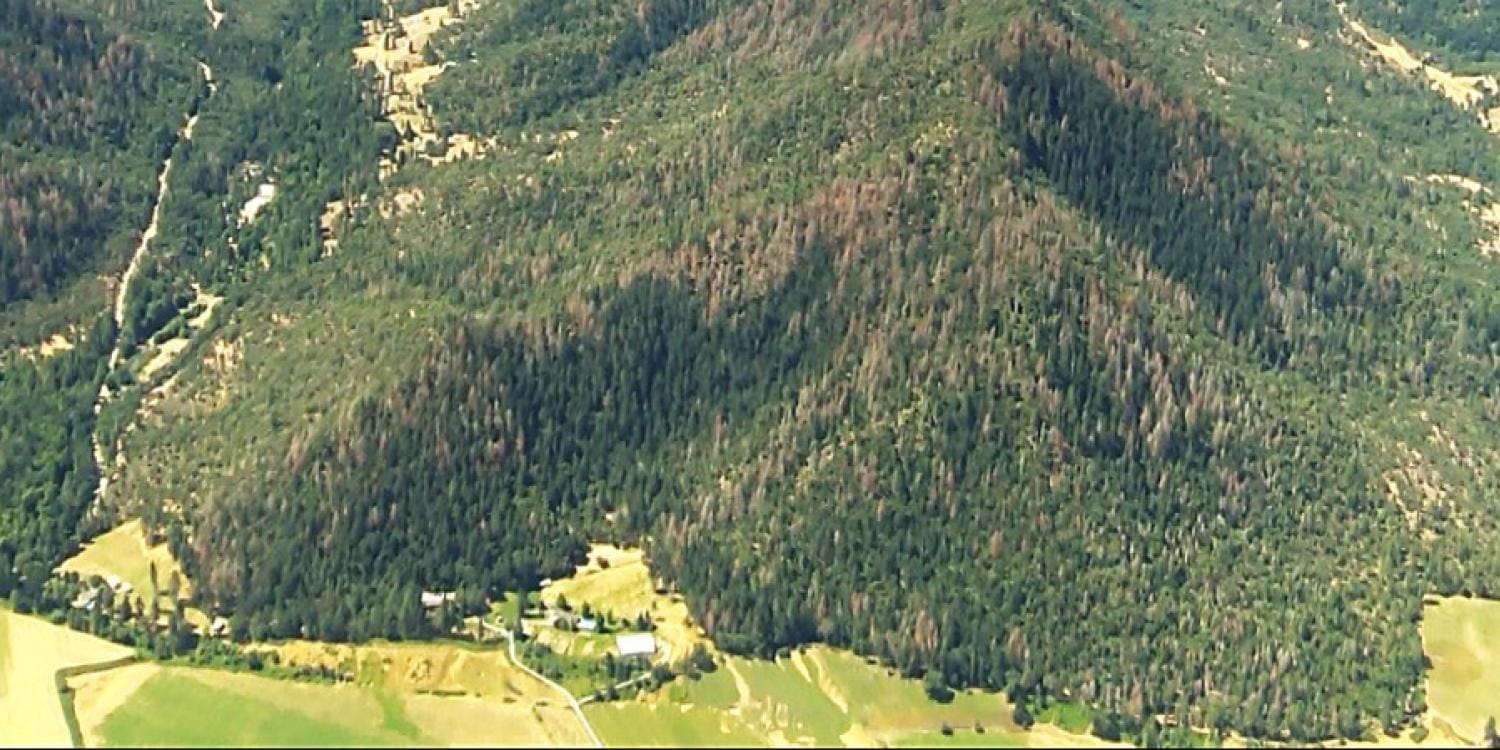
Douglas fir is among the world’s most economically important tree species and is abundant across southwestern Oregon, where it is the dominant species in many low to mid-elevation forests. Douglas fir trees provide vital wildlife habitat, store carbon and are an important source of timber.
Douglas fir trees in the Klamath Mountains are experiencing a “decline spiral” due to multiple factors, including drought, elevated summer temperatures and atmospheric aridity. These stressed trees are more susceptible to insect and fungi infestations, leading to increased mortality. Dead and fallen Douglas fir trees heighten the risk of hotter, more extreme wildfires, particularly in areas receiving less than 35 inches of annual precipitation.
Researchers in the Oregon State University (OSU) College of Forestry conducted a study to assess the factors contributing to Douglas fir mortality. They collaborated with the USDA Forest Service and used data from the Aerial Detection Survey and OSU’s PRISM Climate Group. The study involved collecting field data, analyzing climate information, and developing a tool for landowners and managers to assess tree stand risk as the climate changes.
The study found that Douglas fir mortality is driven by a combination of factors, with the flatheaded fir borer being the predominant insect associated with tree mortality. The researchers identified hotspots of mortality and projected that areas of Douglas fir mortality will increase substantially over the next three decades.
They developed a tool that helps predict the risk of infestation and mortality events, guiding forest management towards more drought-tolerant species like oaks and pines. This approach aims to reduce the overabundance of Douglas fir in dry sites and enhance forest resilience.
The research findings were disseminated to landowner and professional audiences via presentations and field tours and a daylong workshop, reaching a total of about 700 participants at local, state and national levels. The findings are detailed in the OSU Extension publication, “Trees on the Edge: Understanding Douglas fir decline and mortality in Southwest Oregon.” — OSU Extension


