The carbon market is not a new concept. Still, it has garnered attention with USDA’s announcement of a climate partnership initiative that provides incentives to implement climate-smart conservation practices on working lands and quantify and monitor the carbon and greenhouse gas benefits associated with those practices.
Ranchers have opportunities to receive incentives for soil carbon sequestration through different grazing management systems. The question is, how do ranchers get involved, and what considerations should be taken prior to participating in voluntary carbon markets?
Lora Wright, director for sustainable animal proteins at Where from Comes From, told WLJ interested ranchers should gather as much information as possible, look at their operation to see if carbon markets are a good fit, decide if they are willing to make some changes, and look at the goals for their operation.
Along with Eric Harris, Ph.D., Wright prepared a report for the National Cattlemen’s Beef Association, titled “Voluntary Carbon Markets Applicable to Grazing Operations: Review and Considerations for Farmers and Ranchers.” The report gives an overview of the carbon market and considerations producers should contemplate, as well as comparisons between potential companies. The study in its entirety can be found at ncba.org.
[inline_image file=”54d49be00a9e649440dc6d4dc296822c.jpg” caption=”Cattle grazing on the Banister Ranch.”]
The first consideration is what operational goals ranchers hope to accomplish. Is it a financial goal and the possibility of additional revenue, or some other metric? Is it transitioning to regenerative agriculture, improving grazing practices and soil health? Is it providing environmental stewardship and succession of the ranch?
“I think there are benefits for not just the carbon market, but what I would say is the whole ecosystem marketplace,” Wright said. “Along with the benefits of increasing soil carbon come a lot of other benefits for the livestock. It’s better grazing for those lands, for wildlife habitat, for biodiversity and for water quality improvement. There are many more incentives producers need to be looking at than just carbon markets.”
When researching companies, some of the considerations to determine whether or not participation in the carbon market is right for your operation include:
• Eligibility — Is there a minimum land size or acreage required for participation? Do rented, leased or federal land permit holders qualify? Ranchers must identify which land they are committing to carbon sequestration and enroll that portion in a soil carbon sequestration program. Most companies do not have a minimum acreage to qualify, but the financial return might not be viable if too few acres are enrolled.
• Cost to implement — Are there costs initially to participate, and what are the costs for monitoring and reporting? Does the market recognize existing conservation efforts, and what new measures need to be taken and over what time period? Land enrolled in a carbon program is committed to following certain prescribed practices, such as stocking density rates, rotational management or some form of holistic management. Producers need to be aware of the concept of additionality. Producers who have used conservation practices in the past may have difficulty qualifying for carbon credits when they have been using the practice for some time. Most carbon markets require third-party verification to measure soil carbon outcomes. Producers should check the frequency requirements and methodology for soil carbon monitoring and third-party auditing to help determine costs for participation.
• Contract details — What are the terms and conditions of the contract? What is the required length, and are there requirements for an exit? Can you amend the contract, or are there consequences for a reversal/revision of practices? Terms can range from one year to 30 years. Ranchers should also know the length of permanence and transferability between markets or other people/owners.
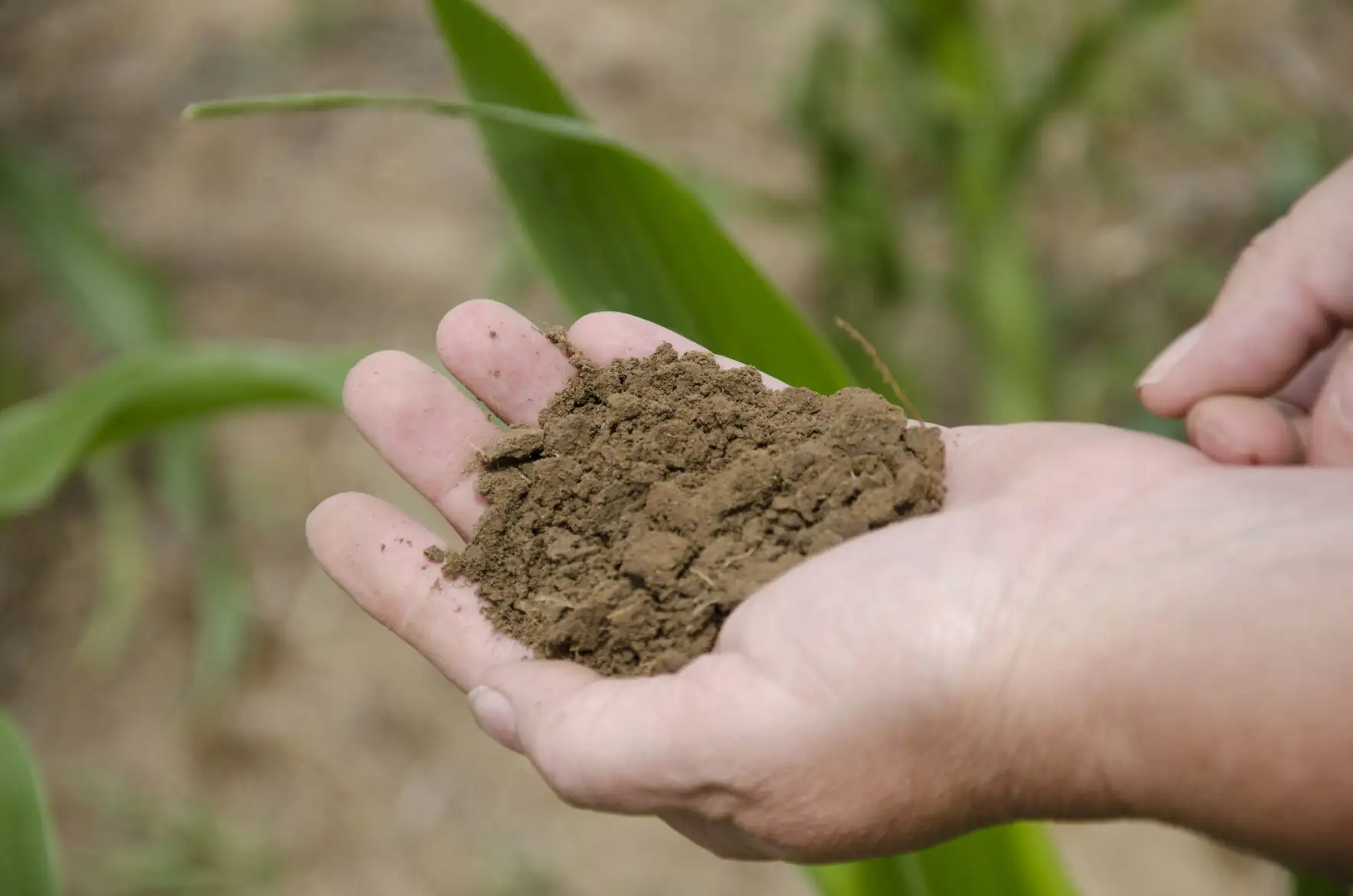
[inline_image file=”251c1e65139fae5372e10d2d1281c7dc.jpg” caption=”Soil structure of the hay ground that was rested shows an old layer of grass that preserves carbon during drought.”]
• Credibility of market and business — What verification is involved, and is it based on scientifically based and sound methodology? Is enrollment or monitoring based on outcome measures or specific practices? How long has the market been available, and how many buyers/sellers are participating? There are several markets in development, and producers should review the current participation in the market of both buyers and sellers.
• Data ownership — What are the ongoing data reporting requirements, and who owns the data? Are tools provided or required to report data, and what are the costs associated with reporting? Determining data ownership and what party or parties have access to the data is important when considering involvement in carbon markets. All carbon markets require some degree of record-keeping, and it may be required to keep more detailed records than a producer has in the past or maintain data in an app or a database on their website.
• Payment — What is the payment per acre or per metric ton CO2 equivalent? How are payments disbursed? At the end of the process, the carbon credit is ready for sale by the carbon platform to a buyer that wants to offset its carbon emissions. For comparison, carbon markets for crop production typically pay between $10-20 per acre. Some markets might use the amount of carbon sequestered measured as metric tons CO2 equivalent, which ranges from $8-30 per metric ton, or the current rate based on an exchange traded on a commodity board. Producers should also look at whether the carbon market allows “stacking,” which allows the same piece of land to receive payments for carbon credits and payments for conserving land (i.e., government programs).
[inline_image file=”7ee28df0a64cac575bcb1e4b5b7f903b.png” caption=”Chart provided by Texas A&M AgriLife Extension.”]
While several companies offer carbon market services, some do not apply to grazing management. Some examples are Nori, Indigo Ag, Farmers Business Network and Nutrien, which focus on row crop production. Some carbon markets for grazing management include Climate Action Reserve, Ecosystem Service Market Consortium (ESMC), Grassroots Carbon, Regen Network and Native. Some of these companies are regional. For instance, ESMC is currently in portions of the Great Plains, the Pacific Northwest and California. Native is currently working with Western Sustainability Exchange in Montana.
Grassroots Carbon
Grassroots Carbon was formed in February 2021 after the grazing management software PastureMap and carbon credit facilitator Soil Value Exchange merged. The key goal for Grassroots Carbon is to remove as many barriers as possible from the carbon credit generation process for landowners, farmers and ranchers.
[inline_image file=”faf202f929f82d3b739d4d3c6f8203d2.png” caption=”3 GR_Logo.png”]
Megan Parks, co-founder and executive vice president of Grassroots Carbon, told WLJ the first stepto enrolling in the program is to call them, as not all properties are good candidates. Parks said that some soils in arid climates do not absorb carbon as well as others.
“We look at where you are geographically and what your climate is, because places that are in more arid climates store carbon more slowly,” Parks said. “And one of the biggest factors is also the way you’re managing your herds and what you’re doing on the land today and what you’re willing to do and intending to do.”
Parks said the ideal candidate is not already practicing holistic grazing management and is willing to change their management practices, as the change will mostly increase the amount of carbon stored. Currently, Grassroots Carbon has participants in Texas, but it is expanding nationwide. Parks noted the northern and southern Great Plains states and parts of eastern Colorado are ideal candidates for enrollment. In the West, Parks said it depends on the amount of rainfall and the soil type.
“If someone is interested in transitioning to those practices and needs support, then supporting them to transition is part of what we are set up to do,” Parks said. “The ideal candidate might have land that’s in a pretty degraded state in terms of carbon, and you can very rapidly improve it.”
[inline_image file=”642c25decdbc611b3c1454bab1ec7676.png” caption=”Chart provided by Texas A&M AgriLife Extension.”]
Parks said there are some costs involved in transitioning land, but Grassroots Carbon will pay some of those costs, including soil sampling and the PastureMap app. With Grassroots Carbon, there is not a problem stacking with government assistance through programs such as USDA’s Natural Resources Conservation Service or Environmental Quality Incentives Program. Grassroots Carbon works best with larger acreage, regardless of whether it is owned, rented or leased, but Parks recommends pairing with neighbors if a producer has smaller acreage to increase cost-sharing carbon payments.
Grassroots Carbon has a cost-sharing agreement of up to 80 percent for the producer and 20 percent to the company to cover expenses. Payments are made annually, extending the contract for another 10 years. Soil samples are done every five years, and an annual survey is conducted with producers, along with spot checks to ensure compliance with the carbon program.
Parks said Grassroots Carbon has ambitious plans to enroll 1 million acres in the next five years through word of mouth, as well as farming and ranching organizations sharing information about carbon payments and how producers can improve their land and their bottom line.
[inline_image file=”032883843051ae27e8bf0a2c4b113664.jpg” caption=”Cattle on K&D Livestock, Inc., near Stacey, MT.”]
Wright cautions that the carbon market is fairly new, so producers must do their due diligence. “Make sure that you understand what the contract is—not only the length of the contract, but then anything in regards to maintaining those practices after the contract is complete,” Wright said. “And then the risk of anything new or newer, and whether it’s going to stick around, which I believe at this point might be the case.”
Wright believes the concept of carbon markets will stick around, as more companies are committed to sustainability, and the agriculture community can benefit from that “because we are stewards of the land, just by what we do.”