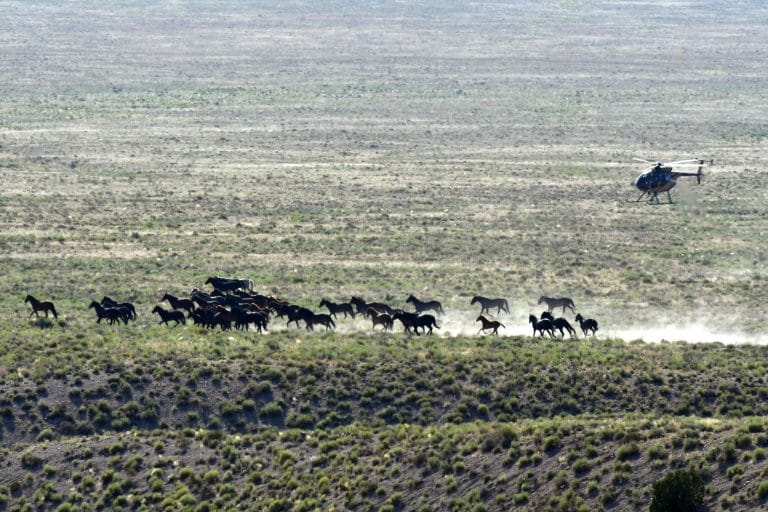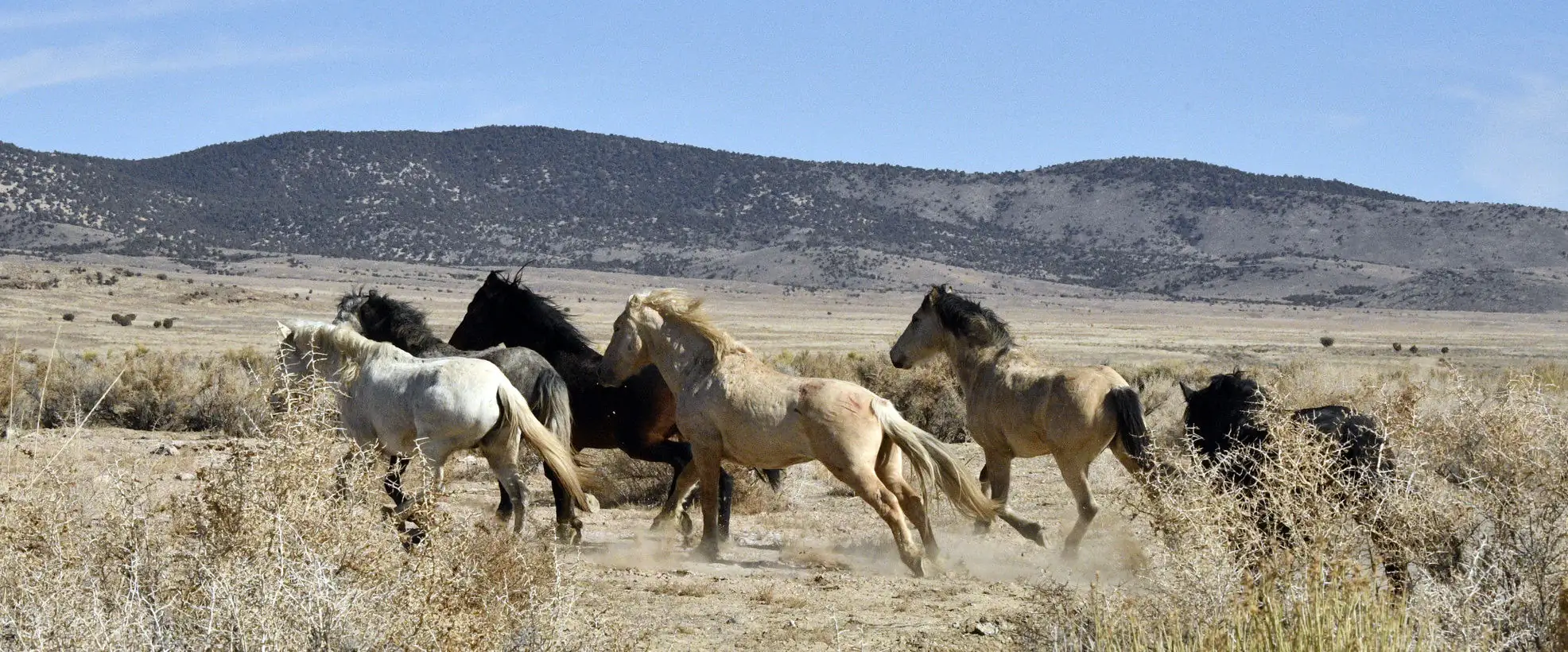
Over the past week, many of you might have read news reports about a new proposal—endorsed by the livestock industry and others—to curb exploding horse and burro populations on Western public lands. The proposal, which originated as a roundtable hosted by Rep. Chris Stewart (R-UT), included multiple state and county officials from Nevada and Utah, national livestock industry groups like the Public Lands Council (PLC), National Cattlemen’s Beef Association (NCBA), American Farm Bureau Federation, and the range science professionals at the Society for Range Management.
As is the case with any true compromise, the effort also had participation from some less likely groups—namely the American Society for the Prevention of Cruelty to Animals, Return to Freedom, and the Humane Society of the United States (HSUS). Obviously, these are groups we do not see eye to eye with on this issue, or any other. In fact, anyone involved in the cattle industry knows that HSUS is one of the most anti-animal agriculture groups out there and an unquestioned foe of our industry.
So why on earth would we engage with them on this issue?
Put simply, the debate over proper management of BLM-owned horses and burros in the West has been stagnant for decades now, and populations on Western rangelands are reaching critical mass. As of this writing, there are over 100,000 horses and burros on-range, and another 50,000 in off-range holding. To make matters worse, at current populations growth trajectory, that 100,000 will become 200,000 in less than five years’ time without immediate action to correct.
The situation is critical.
Despite the overwhelming evidence supporting the need for action, Congress—both Republicans and Democrats—have demonstrated a complete and total lack of political courage to solve this issue, which is ironic since they are perpetuating the problem by including a rider in annual appropriations bills preventing BLM from selling these animals without limitation on intent to commercially process or euthanize. They just aren’t willing to endure the blowback from suburban voters if they try to remove the rider.
Given that reality, we felt this effort might be the best realistic opportunity to make progress on exploding populations and engaged accordingly. Over the course of the past few months, we have wrangled over language, debated facts, and argued endlessly over terminology with these groups. In the end, we arrived at a product that is endorsed by these groups and has the potential to finally provide some relief to our producers.
Boiled down to its core deliverables, the proposal: 1) outlines the need for BLM to increase gathers in overpopulated areas with a target of 15-20,000 head per year; 2) endorses the use of fertility control methods that are more effective than the current PZP, including permanent fertility control, along with far more comprehensive applications; and 3) the removal of older horses from those gathers to long-term pasture-based holding through a request for proposals process that mirrors what BLM currently does, but with expanded focus.
The proposal isn’t groundbreaking. In fact, many folks reading this will say it’s not nearly enough. Those people are correct. It is absolutely not enough. But it is a potential break in the stalemate on this critical issue for Western producers. If it has a chance of providing relief and curbing population growth, it warrants our attention and pursuit.
Compromise is never easy, and in the best circumstances, everyone walks away feeling like they left something on the table. That’s certainly true here, but I’m confident that we’re walking away with more than we started with. In a debate as fraught as this one, that’s a win. — Ethan Lane, senior executive director of PLC and NCBA Federal Lands