Producers who finish their own calves or consumers who purchase a finished butcher calf often face the question of how much beef they will take home after the harvest and cutting process. The answer to the question dictates how much freezer space will be needed. The amount of product yielded from a finished beef calf is often misunderstood. Accordingly, this topic addresses what to expect in terms of the relationship between live weight, carcass weight and actual take home product from the carcass.
Dressing percentage (DP) is the portion of the live weight that will result in hot carcass weight (HCW) after removal of the head, hide and internal organs. For most fed cattle, the HCW will range from 60-64%. HCW will vary and is influenced by gut fill, degree of muscularity and fatness, mud or manure on the hide, and pregnancy status.
For example, a 1,500-pound live finished beef calf with a dressing percentage of 63% DP would yield a 945-lb. carcass. The 945-lb. HCW is not the amount of beef the consumer will take home to put in the freezer. It is noteworthy that a chilled carcass weight will be 2-5% lower than HCW. A beef carcass is 70-75% water; as it chills, water evaporation will cause the carcass weight to decrease.
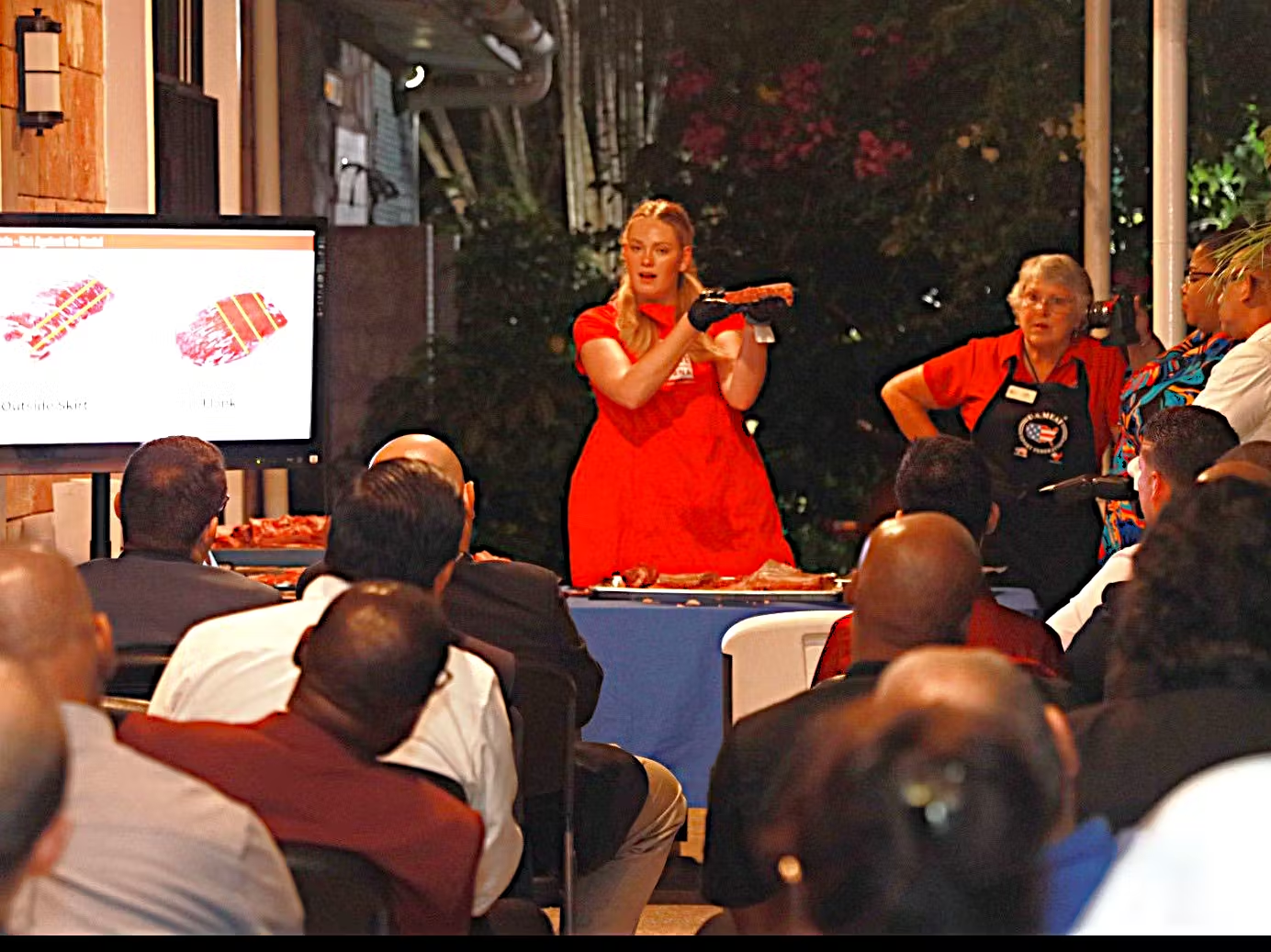
After the carcass is cooled, it will be further processed into cuts of meat. This process is referred to as “breaking down the carcass.” Beef primal cuts are the rib, chuck, shank, brisket, plate, flank, round, short loin and the sirloin. Primal cuts will be further processed into sub-primal or retail cuts.
The basic concept is to remove the majority of the bones, separate tender muscles from less tender muscles, separate thicker muscles from thin muscles and separate fatter from leaner portions. There are several factors that will influence the amount of beef that will be wrapped for the freezer. The most common factors influencing variation include:
• External carcass fat has the greatest impact on the percentage of retail product from a carcass. As more fat is trimmed away, less weight will be in the packaged meat.
• Superior carcass muscularity will increase the percentage of retail product. For example, dairy-type cattle typically yield lower than beef-type cattle.
• Cutting style or the cutting specs given to the processor can affect the take-home yield. This can be a major influence based on the amount of bone-in versus boneless cuts, how much external fat is trimmed off and the amount of fat in the ground beef.
• Carcass aging (typically for seven to 10 days) offers the advantages of improving tenderness and intensifying the flavor of beef. With respect to carcass yield, long-term aging can have a negative effect.
As a general guideline, expect to take home about 42% of the live weight for consumption. If basing the prediction off the HCW, expect to take home roughly two-thirds. If using the 1500-lb. live butcher calf with a 63% DP referenced in the above example, you will need freezer storage space for about 630 lbs. of cut and wrapped beef. — Mark Z. Johnson, Oklahoma State University Extension beef cattle breeding specialist