Several long-awaited changes to the Endangered Species Act have finally come. And, apparently, the sky is falling as a result.
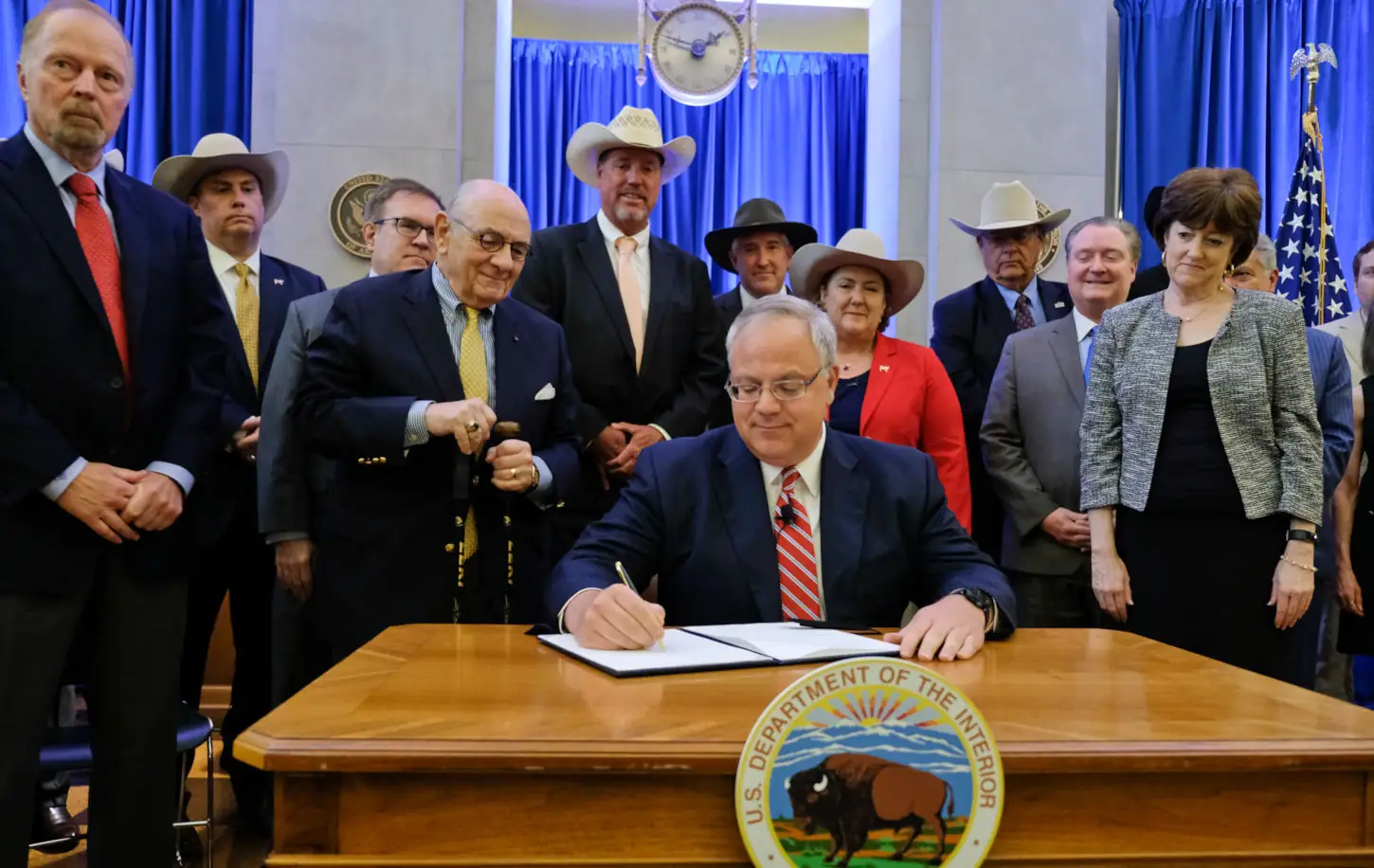
On Monday, Aug. 12, Interior Secretary David Bernhardt announced a trio of finalized changes to the Endangered Species Act (ESA). The changes focus on delisting standards, standards for designating critical habitat, and key definitions used within the ESA. While industry groups have hailed the changes, several others—including two states—have characterized the changes as “gutting” the ESA and promised to sue.
“By gutting key components of the Endangered Species Act, one of our country’s most successful environmental laws, the Trump administration is putting our most imperiled species and our vibrant local tourism and recreation industries at risk,” declared Massachusetts Attorney General Maura Healey in a joint announcement with California Attorney General Xavier Becerra shortly following the finalization of the ESA changes.
“We will be taking the administration to court to defend federal law and protect our rare animals, plants, and the environment.”
Becerra characterized the changes as an attempt to destroy the biodiversity of the planet and “putting a nail in our coffin—all for the sake of boosting the profits of those putting these species at risk in the first place.”
The recent changes to the ESA were proposed back in summer of 2018. They were opened for stakeholder input and collectively attracted over 202,000 comments from the public within the 60-day comment period, which Commerce Secretary Wilbur Ross described as “a robust, transparent public process” when the changes were signed and finalized by Bernhardt.
“The revisions finalized with this rulemaking fit squarely within the president’s mandate of easing the regulatory burden on the American public, without sacrificing our species’ protection and recovery goals,” said Ross.
These new changes will take effect 30 days following being published in the Federal Register, which had not happened as of press time. For a detailed look at the changes made, see STORY NAME on PAGE NUMBER.
“The ESA affects cattle-producing families across the country,” said National Cattlemen’s Beef Association (NCBA) President Jennifer Houston in the group’s official response to the changes. She additionally thanked the agencies and those involved “for bringing this long-awaited regulatory relief to American cattle farmers and ranchers.”
“With these new rules, commonsense will once again be inserted into the ESA process,” said Bob Skinner, president of the Public Lands Council, in the group’s joint response with NCBA.
Tanner Beymer, manager of government affairs at NCBA, said there was “a lot of good stuff to unpack in these rulemakings,” in last week’s Beltway Beef podcast. However, he also reflected on the sometimes-extreme reactions out of some of the environmental groups.
“Since this is such a major undertaking with a lot of strong opinions on the radical fringe side of things, I’ve already seen tons of emails and hair-on-fire sort of reactions,” he said during the podcast.
“We expect a slew of lawsuits challenging this,” he added.
Lawsuits ahead
California and Massachusetts are not the only groups that have announced they will sue. The Center for Biological Diversity also announced they will take the matter to court.
“These changes crash a bulldozer through the Endangered Species Act’s lifesaving protections for America’s most vulnerable wildlife,” said Noah Greenwald, the Center for Biological Diversity’s endangered species director, in the group’s official response to the changes.
“We’ll fight the Trump administration in court to block this rewrite, which only serves the oil industry and other polluters who see endangered species as pesky inconveniences.”
Beymer welcomed the challenges.
“I’m not an attorney, but there are several people who are a lot smarter than I am who have spent countless hours meeting with all the impacted stakeholders from all sides of the spectrum. They have really done their due diligence at the department to make sure these rules will hold up in court.”
WLJ talked to Jonathan Wood, a senior attorney at Pacific Legal Foundation and research fellow at Property and Environment Research Center. Woods has worked extensively on ESA-related cases and related property rights issues. When asked where the changes go from here, he answered simply: to court.
“Honestly, I think we’ll see the kitchen sink,” he said, referring to what form these lawsuits are likely to take. “Every claim that could be made will be made.”
While he said it was likely Administrative Procedure Act (APA) claims might be made—APA being a common regulation cited by environmental litigative groups—he expected claims of ESA violation would be more likely. However, he said the exact strategies the probable plaintiffs might take is hard to predict given how extreme and implausible many of the claims have been.
“The two big things I’ve seen the most that make me want to pull my hair out are that the new rule will allow the agencies to consider economic impacts as a reason not to list a species,” he said, the other being claims that the changes will make it harder to consider climate change impacts in listing decisions. He said both claims are false.
“What the rule says is the agency can report economic impacts in listing decisions, which was previously illegal,” Wood explained of the new changes. “The old regulations forbade even the acknowledgement of those impacts.”
He acknowledged that having such information available could have “some political impact,” he pointed out the ESA does not allow agencies to consider economic impacts while making a listing decision.
“And in the other one, with the ‘foreseeable future and climate change impacts,’ that merely codifies a 2009 policy that has been followed by the Bush, Obama, and Trump administrations. The idea that this will make it harder to consider climate change impacts is simply false because we’ve had quite a few species listed based on climate change impacts under precisely this policy.”
Woods said he expected “every part of the rule” to be challenged in court, and that some of the more significant changes may take a while. But overall, he was optimistic.
“I think the courts will ultimately uphold everything in these rules, but a lot of the things that are getting attention merely codify existing practices or don’t have the effects that people are claiming.” — Kerry Halladay, WLJ editor