As late spring and summer temperatures begin to heat up and cattle are on pasture, it’s important to make sure there is adequate water for livestock. How much do cattle need and where should it come from?
The water requirements for cattle depend on their size, class and environmental conditions. High humidity and greater temperatures also increase water demand. A University of Georgia study lists water requirements for days when the daily high temperature is 90 F. With these conditions, growing or lactating animals need two gallons of water per 100 pounds of body weight.
This means a 1,400-lb., lactating cow will need close to 28 gallons of water daily with 90 F daily highs. If the calves are 250 lbs., they will need about 5 gallons. Some of the water will come from grazed forage. Make sure water tanks or water points are accessible for smaller calves.
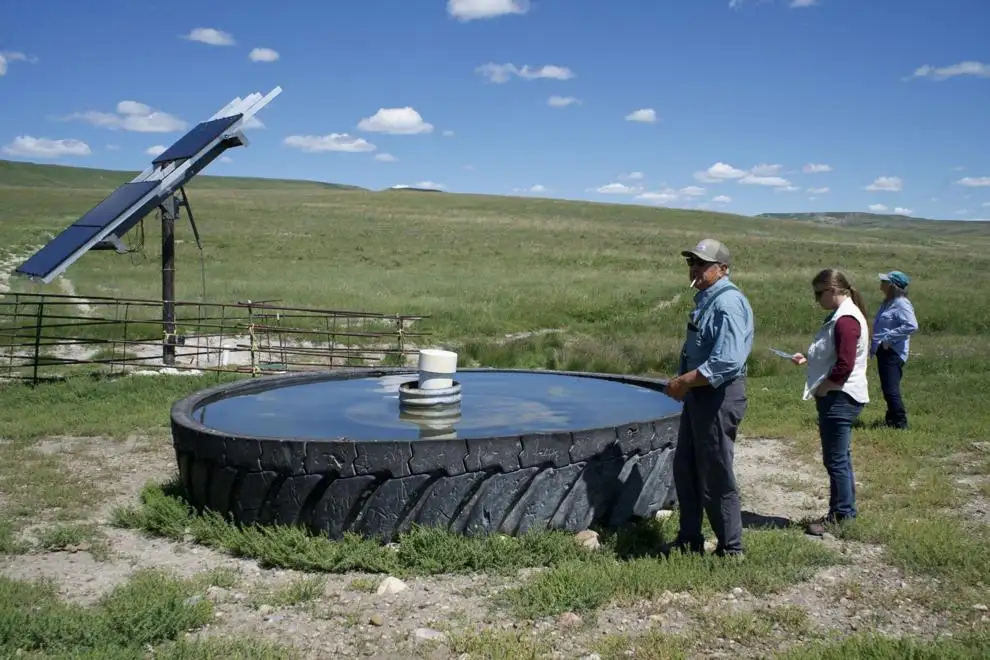
Having fresh, clean water should also be a priority. Whenever dry conditions occur or especially in later summer, water quality from water sources such as dugouts or ponds and dams may not be ideal. The ability to have water close by should also be a goal, although sometimes it’s simply not possible.
More water locations can help meet the water demand but could also help grazing distribution too. Cattle will receive some of their daily water requirements when they are consuming high moisture feedstuffs such as fresh forage when grazing pasture, silages or green chopped feeds. Feeds that are high-energy increase the water requirement.
Keep an eye on water this summer and make sure livestock have enough, good quality water available. — Jerry Volesky, Nebraska Extension