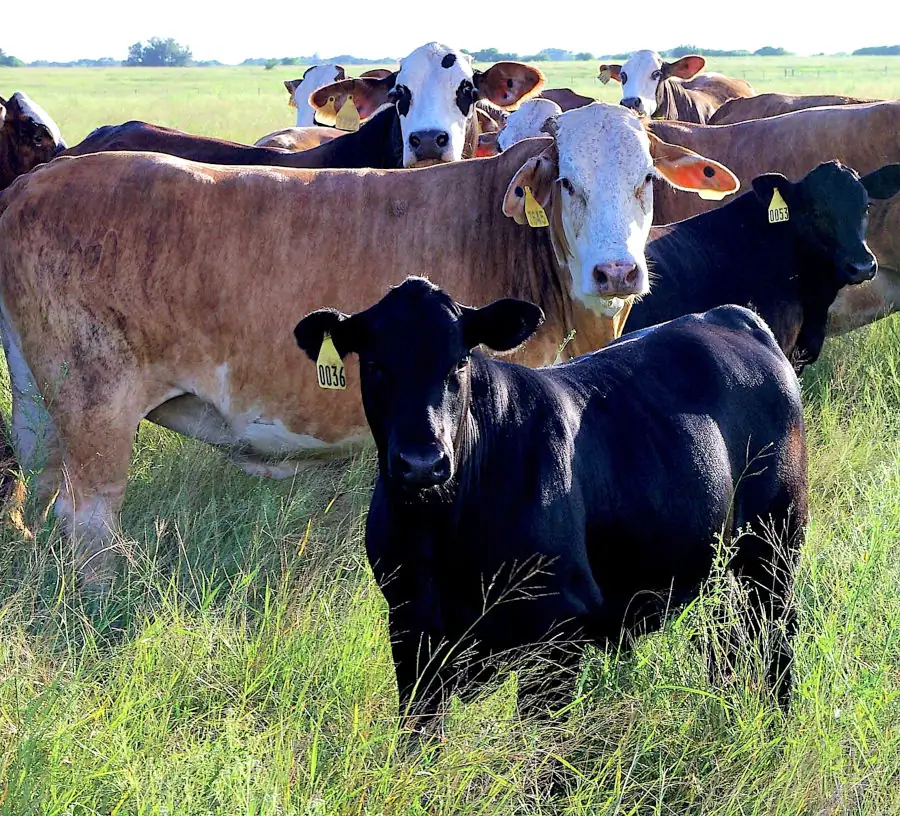
Keeping a tight grip on feed costs is a priority for every beef producer. Creep feeding calves can be a good return on investments in certain situations. Maintaining the calf’s efficiency at an early age is becoming much more critical with modern market requirements.
The gross income of the cow-calf enterprise is partially dependent on the weaning weight of the calves. Outside of changing weaning date, there are management strategies that can increase calf weaning weight. However, chasing increased output or calf weaning weight can have some negative downstream implications to profitability of the cow herd.
Strategies to increase calf weaning weight could include increased selection for maternal milk production, increased genetic selection for growth, increase in forage quality consumed by the calf, and creep feeding the calf to increase nutrient intake.
Creep feeding of beef calves usually is reserved for specific market and management situations such as high calf prices, low feed prices, dry lot operations, fall-born calves, and purebred bull calves. Creep feeding suckling calves can increase market weight of the calf at weaning.
Creep feeding must take into account the economics of the cost of gain, potential market endpoint, and the influence of sale price of the calves. For instance, the cost of the gain from creep feeding has to be less than the value of the gain to be a profitable nutritional strategy. Because there is data that suggests non-creep-fed calves catch up with their creep-fed mates post-weaning, the highest return is realized if calves are sold at weaning.
Under severe drought conditions, creep feeding can be used to sustain minimal calf growth. A risk of creep feeding is getting calves too fat, resulting in price discounts. In addition, long-term data shows that creep feeding heifers will lower their long-term productivity by decreasing lifetime milk production.
Some of the items that need to be considered when deciding whether to creep feed are:
• Nutrient requirements and ration composition;
• Feed conversions of different types of creep feeds;
• Post-weaning calf performance and bunk-breaking calves;
• Retaining replacement heifers;
• Challenges of starting calves on the creep rations;
• Creep feeding design;
• Location of creep feeder;
• Benefits of bunk-breaking calves for post-weaning; and
• Calculating return from creep feeding. — University of Nebraska-Lincoln Extension