As with many things in life, timing is everything when it comes to vaccinating calves. The best time is like a moving target: If you shoot too early you miss it, and if you shoot too late the opportunity for adequate protection for certain calfhood diseases may be already gone; the animal may be vulnerable to infection before he can mount a good immunity.
Newborn calves gain temporary, passive immunity from disease when they ingest colostrum from the dam—which contains maternal antibodies. After a few weeks or months this temporary protection wanes; calves must build their own immunities.
Vaccinating calves at the proper time can help them create immunity and protect them until weaning age. Weaning-time vaccines then act as boosters. Vaccinating too soon, however, may not stimulate much immune response. If a young calf still has maternal antibodies in his system, these tend to interfere with building his own immunities to certain disease conditions because the body sees no need to respond.
Dr. Chris Chase, Department of Veterinary and Biomedical Sciences, South Dakota State University, says that when maternal antibody protection begins to wane, we can probably get good response to vaccinations by about 3 months of age.
“It all depends on how much protection the calf received at birth (how much colostrum, how soon—for maximum absorption of antibodies—and how good it was). In most herds, you won’t find 100 percent of the calves fully protected; it’s more like 70 to 80 percent of them. When developing calf vaccination programs, we also need to know what disease problems are going on in the herd,” he says.
If it’s a herd that’s had issues with BRSV (bovine respiratory syncytial virus), for instance, this necessitates a different plan.
“BRSV is notorious for having maternal interference at low levels that can last a long time,” says Chase. If the calf received antibodies against BRSV from colostrum, he may not gain much immunity from an injected vaccine unless it is adjuvanted until those maternal antibodies are gone from his system.
Dr. Tom Hairgrove, Extension Veterinarian, Texas A&M, stresses importance of consulting with your veterinarian to build a health plan which includes a vaccination program appropriate for your region and situation. This may include pre-calving vaccination for cows, so they’ll have adequate antibodies in colostrum to jump-start immunity in their calves. The cows also need adequate nutrition to build colostrum.
“We’ve seen issues this year, with calves that got sick because the cows did not have good body condition at calving, and poor colostrum. If the cow’s nutrition is poor, she won’t have good immune response to vaccination, and won’t be able to put those antibodies in her colostrum.”
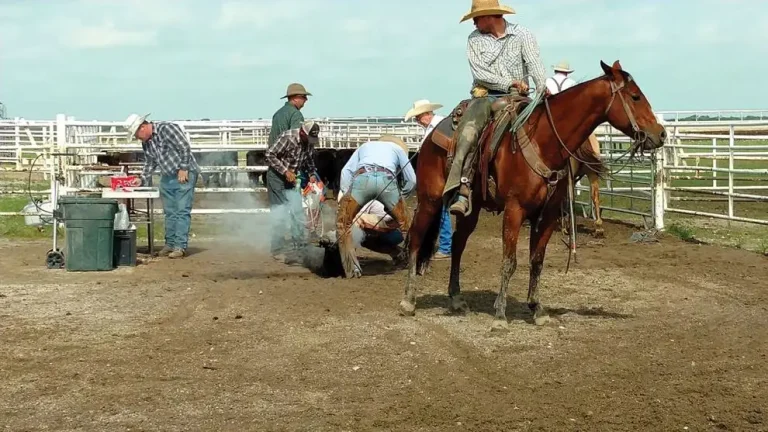
The calves themselves should be vaccinated by the time the temporary immunity from colostrum wears off. He says most calves are vaccinated at branding time, which generally works well to stimulate an immune response. A few ranchers vaccinate calves at birth to give protection against certain scours pathogens, such as an oral E. coli vaccine.
The age for routine vaccinations varies, depending on the individual ranch’s facilities and goals. There’s been discussion among veterinarians during the past decade regarding timing.
“At the Western Veterinary Conference in late February there was talk about vaccination protocols and vaccinating calves too young. This debate is ongoing, so you should discuss vaccine timing (appropriate for your herd) with your veterinarian,” Hairgrove says.
The important thing is to try to get calves off to a good start with the dam’s colostrum.
“After that we try to determine the best time to vaccinate calves, and do the best we can with our limited knowledge and our own situations. All too often producers want a ‘canned’ program on what to give and when. I can tell them which diseases they should try to protect their herd from, but how they do it will vary regarding their own situation and expectations. It may make a difference what your neighbor is doing.
“You can’t protect your animals with just a vaccine if the guy next door is trading calves and bringing in new cattle that may bring diseases with them. No vaccine is 100 percent protective. You must take other precautions to prevent exposure to diseases or you may still have some issues,” he says.
Summer pneumonia and intranasal vaccines
“Producers need a plan for their own situation,” Chase says. There are many different protocols.
“You might decide to give calves vaccinations for IBR/BVD, but those two diseases are generally not an issue in young calves,” he says, referring to infectious bovine rhinotracheitis/bovine viral diarrhea. You need to be more concerned with these diseases as calves approach weaning age.
“Some herds, however, have trouble with summer pneumonia in young calves, and BRSV is a problem. In these cases, there are a couple approaches. One is to use an intranasal vaccine,” says Chase.
“The intranasal vaccines can be useful, depending on the situation. If you’re not seeing summer pneumonia or rarely see BRSV in calves before weaning, there’s no reason to vaccinate for this right away, and calves can probably mount immunity adequately with injectable vaccines. But if a producer is trying to prevent summer pneumonia, getting an intranasal vaccine into young calves does seem to help. Intranasal vaccine has the ability to get around maternal antibodies,” he says.
The other thing a producer can do is use an adjuvanted vaccine.
“We don’t yet know, however, how effective these vaccines are against BRSV in calves with maternal antibodies. If we know we have a summer pneumonia problem, BRSV is usually the culprit. There’s no vaccine just for BRSV, however. You must use the combination product containing BRSV-IBR-BVD-PI3, even though at this age in calves the BRSV is the only thing you are really worried about,” Chase says.
“The big thing is trying to match up (as much as possible) your vaccination program with the issues you’ve had to deal with in the past. You may or may not need to vaccinate against bacterial pneumonia. The intranasal vaccine will give the most likelihood of success and the least likelihood of failure, in that age group. From two weeks up to three months, this makes the most sense, particularly if you are worried about BRSV.
“The adjuvanted modified-live vaccine, where you give a single dose, also has some usefulness, but I haven’t seen enough data yet in young calves. The intranasal vaccine, by contrast, has plenty of data to show that it works in spite of maternal antibodies; when the researchers came back and challenged those calves 60 to 70 days later—as would be the case in calves that get summer pneumonia at 1 to 2 months of age—they were protected. If there’s a viral pathogen involved it’s usually BRSV,” says Chase. — Heather Smith Thomas, WLJ correspondent