The Bureau of Reclamation (BOR) announced it is preparing to release water from Wyoming’s Flaming Gorge Reservoir in an effort to stabilize Lake Powell, as drought conditions across the Colorado River Basin deepen and threaten critical infrastructure.
According to the agency, the Colorado River system is currently operating at roughly 36% of total storage capacity. That figure reflects years of persistent drought, now compounded by one of the lowest snowpacks on record and unusually warm temperatures in March. Together, those conditions have sharply reduced runoff and inflows into the system, raising concerns about water supply and hydropower reliability for more than 40 million people who depend on the river.
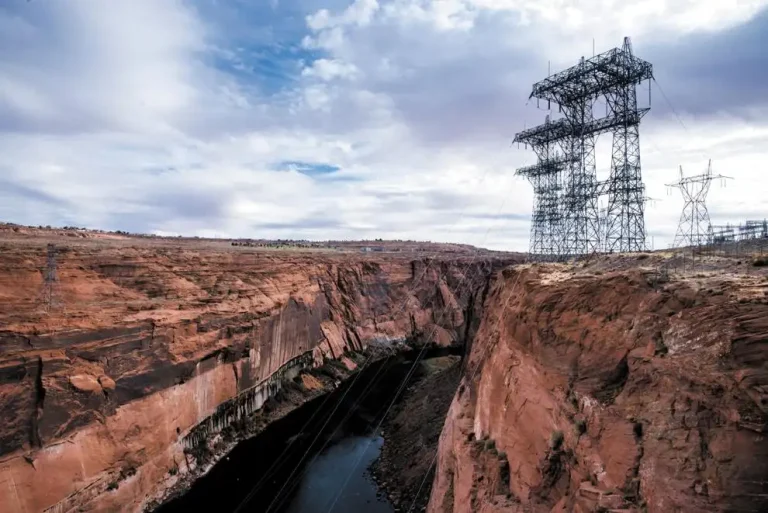
At the center of concern is the water level in Lake Powell. BOR’s April 2026 “24-Month Study” projects that inflows to Powell could fall to just 2.78 million acre-feet (an acre-foot is 325,851 gallons) this water year—about 29% of the historical average. The study indicates that Lake Powell could decline below an elevation of 3,490 feet—the minimum level needed to generate hydropower at Glen Canyon Dam—by August 2026 if no action is taken.
To avoid that scenario, the agency is moving forward with emergency drought response measures. The agency plans to transfer between 660,000 acre-feet and 1 million acre-feet of water from Flaming Gorge Reservoir between April 2026 and April 2027 under the 2019 Drought Response Operating Agreement. In addition, it will reduce releases from Lake Powell to Lake Mead by 1.48 million acre-feet, lowering total outflows to 6 million acre-feet through September 2026.
BOR anticipates those actions will raise Lake Powell’s water level by roughly 54 feet, bringing it to at least 3,500 feet by April 2027. The agency said the goal is to keep the reservoir above critical thresholds while maintaining operational flexibility as conditions evolve.
According to the announcement, Flaming Gorge Reservoir, currently at about 83% of capacity with roughly 3.1 million acre-feet of water, will see a notable drawdown. BOR estimates the reservoir’s elevation could drop by about 35 feet over the next year, leaving it near 59% of capacity. Despite that reduction, officials said the releases will not affect contracted water rights at Flaming Gorge or Lake Powell.
The agency said similar releases are not planned for Blue Mesa in Colorado and Navajo Reservoir in New Mexico, due to already low storage levels and poor inflow forecasts.
BOR officials acknowledged the tradeoffs involved in the plan, particularly for downstream reservoirs. Reduced releases from Lake Powell are expected to accelerate declines at Lake Mead, potentially cutting hydropower generation capacity at Hoover Dam by as much as 40% as early as this fall. The agency said they are working with officials in the Lower Basin states of Arizona, California and Nevada to offset those impacts through conservation efforts and coordinated management.
Additionally, the announcement said that the downstream water reduction will affect recreation and local economies. Lower reservoir levels could limit boating access at upstream sites, alter rafting conditions through the Grand Canyon, and further restrict access at Lake Mead National Recreation Area. BOR said it is coordinating with recreation managers to address those impacts as conditions change.
Assistant Secretary for Water and Science Andrea Travnicek said the agency’s immediate focus is on protecting system integrity. “Given the severity of the risks facing the Colorado River system, it is imperative that we take action quickly,” she said, noting the importance of safeguarding water deliveries, infrastructure and operational flexibility.
The proposed drawdown has also drawn attention from Upper Basin state leaders, who emphasized the need for careful coordination. In a joint statement released on April 9, governors from Colorado, New Mexico, Utah and Wyoming called the current conditions “one of the worst on record.” They stressed that any releases from Flaming Gorge must comply with existing agreements and be appropriately sized.
The governors also underscored the impacts already being felt in the Upper Basin, where reduced runoff is triggering mandatory curtailments of water rights, some dating back to the 1800s. Those cuts, they noted, are occurring without compensation and are affecting Tribes, agricultural producers and local economies. They further called for assurances that water released from upstream reservoirs will ultimately be recovered and emphasized the importance of maintaining storage for future dry years.
At the time of the announcement, Secretary of the Interior Doug Burgum met with governors representing all seven Colorado River Basin states to discuss the situation. The meeting underscored the urgency of reaching a long-term agreement as the basin enters another year of extreme drought and tightening supplies.
“Interior and Reclamation continue to coordinate with the basin states, Tribes, Mexico and basin stakeholders as we make the decisions necessary to operate and protect the system,” Burgum said. — Charles Wallace, WLJ contributing editor