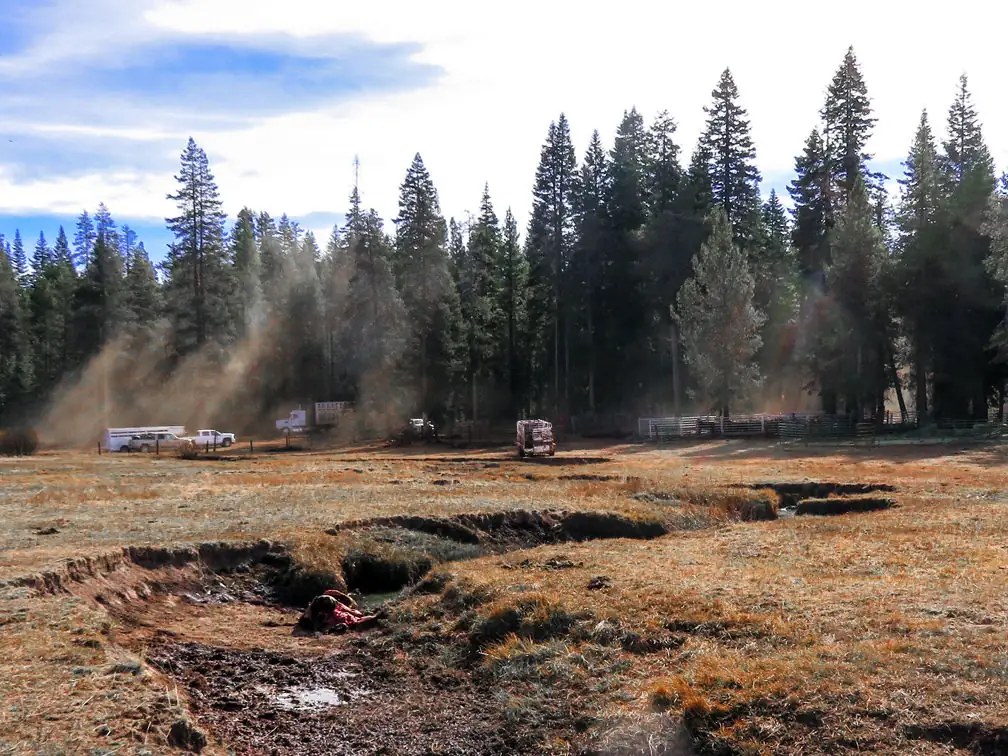
The first confirmed death of livestock by wolves in California was announced by the California Department of Fish and Wildlife (CDFW) on Oct. 13. The kill occurred on the Roney Ranch in Lassen County, located in the northern part of the state.
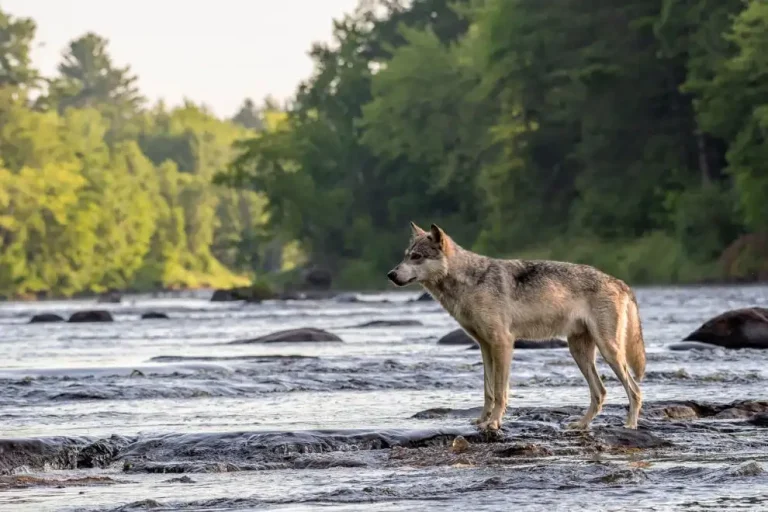
As previously reported in WLJ, (July 17, 2017) CDFW confirmed the presence of wolves in Lassen County last summer. Their presence was detected in May, and in June CDFW biologists captured a 75-lb. female and fitted her with a radio tracking collar. Genetic samples from the female did not determine where she originated.
The gray wolf is currently listed as an endangered species in California under both the federal Endangered Species Act and the California Endangered Species Act. Current law prohibits ranchers from managing wolves—including hazing or chasing them when livestock are threatened; killing wolves is prohibited. Livestock producers are allowed the use of nonlethal deterrents such as fladry flags or flashing lights, which according to some producers, offer only a temporary solution.
The recent livestock depredation resulted in the death of a 600-lb. heifer owned by Wally and Billie Roney. Billie spoke with WLJ and said while this is the first confirmed kill, it is not the first loss they have experienced. At least four other heifers have been killed in suspected wolf attacks.
The Roneys knew wolves were in the area and were taking precautions to protect their herd, having moved them off of a 100,000-acre grazing area that included deeded land and forest service land. The cattle were moved to a 700-acre meadow on private land and were being rounded up so they could be hauled by truck to lower elevations for the winter. Billie said they left behind enough forage for about a month-and-a-half of grazing.
Billie explained that some cattle had been moved into a corral, so they would be ready to ship the next morning; the heifer that was attacked was not part of the corralled group. Billie told WLJ that when they arrived at the corral the morning of Oct. 13, she observed a wolf carry off the heifer’s shoulder. “I thought as I stood there, ‘This is the definition of insanity! I have to watch this and I can’t protect my girls [heifers], I can’t protect my ranch, all because some idiot decides this is what they want it to be when they have no skin in the game.’ They don’t know what it is like. They don’t know how traumatizing it is—not just to the cattle, but to us too. It’s insane!”
The Roneys spent five days gathering and shipping cattle; during that time Billie said the wolves watched the activity from a distance of about 100 yards. “They weren’t scared of us.”
The Livestock Loss Determination report by CDFW confirmed the female wolf, identified as LAS01F, was present at the site at midnight, 3 a.m. and 6 a.m. on Oct. 13. The report stated that while staff were investigating the kill, the wolf was on a forested slope, approximately 620 meters (678 yards) from the carcass.
Although the CDFW has not confirmed other depredations in the area, the report stated, “LAS01F and other members of the Lassen pack have repeatedly visited and/or fed on cow carcasses in the same meadow/pasture in recent weeks.”
The CDFW report summarizes, “The locations and extent of the pre-mortem bite wounds are consistent with that of a wolf attack. LAS01F was at the carcass location for at least six hours the night the cow died, and wolves were observed at the carcass the following morning. These factors are sufficient to confirm this incident as a wolf depredation.”
Billie told WLJ that her family has been targeted by some social media conversations, saying cattlemen don’t know how to take care of their cattle and other disparaging comments. She added that some comments favor killing the wolves and show pictures with a wolf in the cross-hairs, which she said is equally bad and doesn’t help the situation.
The CDFW implemented a wolf conservation plan in 2016, and, unlike other states where wolves are present, this is not a “management” plan and does not contain provisions to lethally take problem animals. Learn more at www.wildlife.ca.gov and enter gray wolf in the search box.
WLJ questioned CDFW about possible changes to the conservation plan that would allow ranchers to more aggressively protect their herds. In an email response, Jordan Traverso, CDFW deputy director of communications wrote, “Because the Fish and Game Commission listed the wolves as endangered in the state, a mechanism to legally kill them (like depredation permits) would have to be taken up by the commission or the legislature.”
When that plan went into effect, California Cattlemen’s Association (CCA) issued a statement saying it “falls short of providing sufficient tools for California ranchers to protect their livestock from the threats posed by gray wolves.”
CCA is currently suing the CDFW to overturn the gray wolf’s endangered species status in California, which, according to CCA, would open the door for greater management.
CCA Director of Government Affairs Kirk Wilbur told WLJ, “Unfortunately, current law not only prohibits ranchers from managing wolves when they threaten livestock; it also prevents the California Department of Fish and Wildlife from undertaking any true management of the wolves. Unlike in other states, such as Oregon and Washington, there is no provision in California law that would allow the department to remove problem wolves if they become chronic depredators of livestock.” He went on to say, “While ranchers can alter their own management of their land and livestock, such management is typically expensive and the solutions (such as a variety of nonlethal wolf deterrents) are short-lived. Without a change in the law, ranchers and state officials have little recourse available for protecting livestock and other targets of gray wolves.”
The CDFW’s current plan does not have a provision for compensation, and even if that was included, Traverso referred to Part II, Chapter 11 of the plan that explains funding would need to be obtained for compensation if it becomes authorized.
But for ranchers like the Roneys, compensation is not the answer. Billie explained that her husband has said he won’t accept compensation because in his opinion that would be agreeing with something that is wrong. “Taking money would be an agreement that having wolves there is OK,” she said.
As noted, the cattle were moved off the high elevation pasture early. When asked if the presence of wolves would affect their decision to put cattle back in that area in the spring, Billie said they will wait and see but her husband told her he would not put his cattle back among the wolves.
“I don’t think there is a way to live with wolves. People can impugn us and make fun of us, but honestly, if you love your cattle and you like to see them be healthy and happy, this is no world for a wolf,” Billie concluded. — Rae Price, WLJ editor