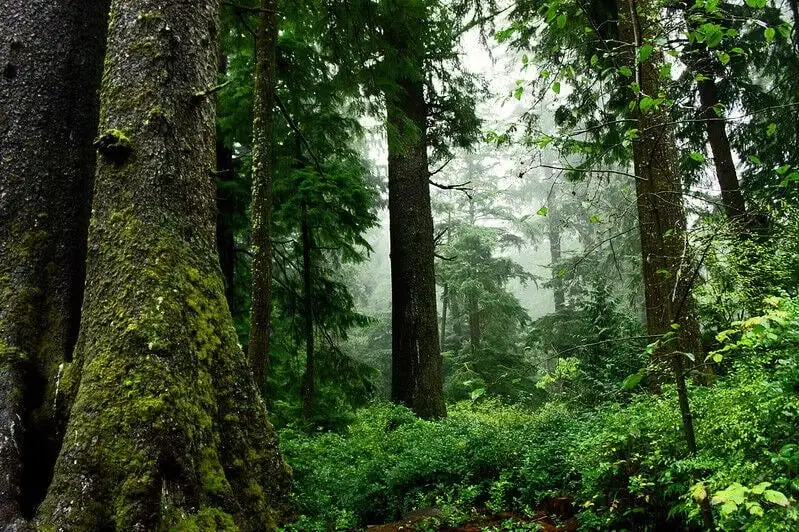
The U.S. Forest Service (USFS) has proposed an amendment to land management plans across the National Forest System to develop a consistent management framework for conserving, stewarding and monitoring old-growth forests.
The primary objective of the amendment is to enhance the long-term resilience of old-growth forests, address threats such as climate change and wildfire risks, and ensure the health and productivity of these forests for future generations.
“Old-growth forests are important to our ecosystems by capturing carbon, and contributing to clean air, soil, water and diverse habitats,” USFS Chief Randy Moore said. “Old forests also provide other benefits like subsistence and cultural uses, outdoor recreational opportunities and sustainable local economic development.
He continued, “The proposed old-growth amendment will provide guidance that can be adapted locally to support multiple uses, including proactive stewardship of old forests to reduce wildfire risk and create long-term resilience in a changing climate.”
According to a previous technical report, old-growth forests are characterized by old trees and unique structural attributes, such as large tree size, large dead woody material accumulations, multiple canopy layers and distinct species composition. The report said the forests provide numerous ecosystem services and hold significant social, cultural, and economic values, and recreational experiences. Definitions for old-growth forests vary across regions and forest types, reflecting their diverse ecological conditions and developmental processes, the report said.
A recent inventory by USFS and Bureau of Land Management revealed the agencies oversee over 32 million acres of old-growth forests and approximately 80 million acres of mature forests across 200 types. Old-growth forests represent 18% and mature forests account for 45% of the more-than 178 million acres under their management.
DEIS
The draft environmental impact statement (DEIS) outlines several action alternatives for the amendments to land management plans (LMPs) to address old-growth forests, each aimed at enhancing the management and protection of old-growth forests.
The preferred alternative, Alternative 2, proposes strategic, plan-specific amendments based on a detailed review of existing LMP content and forested conditions. This alternative would add specific components to each LMP, including goals, desired conditions, objectives, standards, guidelines and monitoring requirements.
Alternative 2 does not propose a single national definition for old-growth forests; instead, it allows for applying regional or local definitions to accommodate the varied ecological conditions across the National Forest System. This approach offers flexibility for the local development of adaptive strategies for old-growth forest conservation, the agency said. It allows line officers to amend or revise plans based on the best available science, including Indigenous knowledge.
Alternatives 3 and 4 represent more and less restrictive approaches, respectively, with varying impacts on forest management flexibility and conservation effectiveness. Alternative 3 restricts all commercial timber harvest in old-growth forests to provide further protection. Whereas, Alternative 4 allows timber production to be a primary driver for vegetation management in old-growth forests.
Reactions
The Public Lands Council (PLC) said the DEIS targets not only timber production, “but it also has a chilling effect on efforts to mitigate catastrophic wildfire, efforts to address pinyon-juniper encroachment, and more.” PLC plans to submit comments on the DEIS.
Environmental groups said while the DEIS is a step towards protecting old-growth forests, it needs to go further to protect trees from logging, as only a fraction of the forests remain.
“We look forward to engaging in this process to ensure the amendment not only retains but increases, the amount of old-growth forests across the country,” Sierra Club Forest Campaign Manager Alex Craven said. “Shifting our approach to national forests from resources meant for extraction to natural wonders worth preserving is long overdue.”
Michael O’Casey, deputy director of Forest Policy and Northwest Programs for the Theodore Roosevelt Conservation Partnership (TRCP), said hunters and anglers have been crucial in shaping management decisions for the National Forest System, and they support the agency’s modified proposed action for maintaining forest diversity and active stewardship.
“The sporting community understands the importance of forest diversity, including old forests, and TRCP is encouraged that the agency’s modified proposed action supports active stewardship, which will ensure key forest management tools remain available,” O’Casey said.
Congressional Western Caucus Chairman Dan Newhouse (R-WA-04) opposes the DEIS, stating it harms rural communities and increases forest fire risks by limiting timber harvesting and proper management tools. He pledges to ensure forest managers retain the necessary tools and to work to prevent the amendment from being implemented.
Comments can be made by Sept. 20 online at tinyurl.com/2p9urfk6 or by mail to: Director, Ecosystem Management Coordination, 201 14th Street SW, Mailstop 1108, Washington, D.C. 20250-1124. — Charles Wallace, WLJ contributing editor