Fittingly, the California Natural Resources Agency (CNRA) released the final “Pathways to 30×30” report on Earth Day to achieve the state’s goal of conserving 30 percent of lands and coastal waters by 2030 in order to protect biodiversity and combat climate change.
The report states the state has currently conserved 24 percent of its land and 16 percent of its coastal waters. CNRA considers an area “conserved” if it meets the criteria of “30×30 Conservation Areas,” which the definition describes as “areas that are durably protected and managed to sustain functional ecosystems, both intact and restored, and the diversity of life that they support.”
California’s strategy to conserve an additional 6 million acres of land and half a million acres of coastal waters involves several pathways, including accelerating regionally-led conservation, buying strategic lands for conservation and access, expanding voluntary conservation easements, and aligning investments to maximize conservation benefits.
The definition of 30×30 Conservation Areas encompasses areas under government ownership or control, under perpetual easements, and areas with species and habitat protection designations not subject to reversal. Some examples cited in the report are state and national parks, federal wilderness areas, ecological reserves and open spaces, and recreational hunting and fishing areas subject to resource planning criteria and management to prevent biodiversity loss.
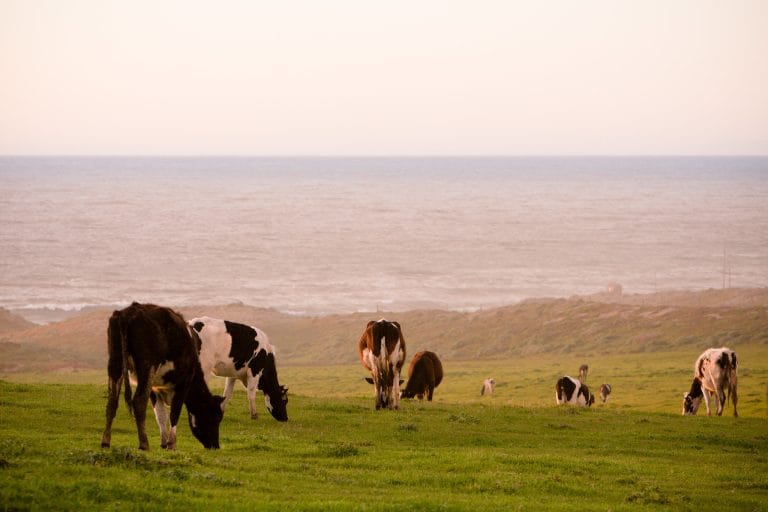
The report also considers working landscapes under conservation easements 30×30 Conservation Areas if they are sustainably managed for biodiversity. This can include private grazing lands, ranches and working forests with durable formal protections for biodiversity, such as conservation or conservation mitigation easements.
The California Cattlemen’s Association (CCA) in its May 2 Legislative Bulletin said while the report stresses conservation easements, it does appear to class them as “conserved.” CCA states more than 2 million acres are under conservation easements, but CNRA’s mapping tool for visualizing 30Ч30 only shows a little more than 768,000 acres of land.
CCA wrote the difference could be attributed to how CNRA classifies what is considered “conserved.” CNRA will use the U.S. Geological Survey’s (USGS) land classifications, known as Gap Analysis Project (GAP) codes. GAP codes correspond to the degree of protection a particular area receives, with GAP code 1 signifying the strongest protection measures on conserved lands. CNRA will use GAP codes 1 and 2 for classification as “conserved.”
The report states GAP codes 3 and 4—lands that are under protection but subject to extractive uses—play a role in meeting the goal as long as they “are managed in ways that protect biodiversity and habitat, increase connectivity, or enhance ecosystem values while supporting economic activity or other necessary functions.”
CCA notes to achieve the goal of conserving the additional 6 percent of the land to reach the 30 percent conservation goal, CNRA has Appendix B, titled “Near-Term Actions to Jumpstart 30Ч30.”
“Some of these actions may be favorable for the state’s cattle producers—efforts to ‘increase voluntary conservation easements,’ for instance—while others may be more problematic (for example, additional acquisition of land by the state),” CCA wrote.
To achieve the goal of acquiring acres to meet the initiative’s goal, the report states that identifying areas to conserve should be “purposeful, strategic, science-based, and most importantly, aligned with local conditions, communities, and economies.” Conservation is best achieved when acquired areas can meet all three 30×30 key objectives: protecting biodiversity, advancing climate action and expanding equitable access, the report read.
However, the report notes that not all acquisitions can meet these objectives. The report states a state-federal interagency team will identify willing sellers in order to find land for acquisition and secure funding through the federal infrastructure bill and the Land and Water Conservation Fund.
The report notes candidate lands for acquisition include those that increase connectivity between conserved or restored habitats to provide wildlife corridors. State agencies will also work with landowners to increase voluntary conservation easements.
In addition to the “Pathways to 30×30” report, CNRA also released the “Natural and Working Lands Climate Smart Strategy,” which outlines the state’s approach to meeting its climate change goals through healthy landscapes that store carbon, limit future greenhouse gas emissions into the atmosphere and buffer climate impacts.
The report defines eight landscape types that California will better manage, including forests, farms, communities and wetlands. It highlights priority nature-based solutions that combat climate impacts in each landscape to help meet California’s broader environmental, economic and social objectives. The strategy also charts near-term actions and underscores partnerships as essential to all of this work.
To advance these reports and put them into place, Newsom has proposed $768 million over two years, with nearly $600 million in the 2022-23 budget. Some aspects of the proposed budget that are of interest to producers include:
• $5 million to the California Department of Forestry and Fire Protection to provide fire prevention grants for wildland grazing.
• A portion of the $200 million the Wildlife Conservation Board will receive for rangeland grazing and grasslands protection to improve working land climate adaptation and resiliency programs, including grazing.
CCA stated it would continue to engage with CNRA and other relevant state agencies to shape future regulatory proposals that are favorable to California cattlemen, and it will continue to advocate for recognition of lands already “conserved” by the state’s rangeland stewards in the cattle industry.
A copy of the report can be found at californianature.ca.gov/pages/30×30 — Charles Wallace, WLJ editor