There was some early week trade on Tuesday when cattle feeders sold feed cattle for $164 on a limited number of cattle. Early week trade is positive for cattle prices. Now that packers will be forced to compete aggressively for better-grading cattle, they will resist the market of supply and demand. By April, packers will be desperate for quality cattle. Cattle feeders know this and should be pressing the market higher.
As of Thursday morning, the February futures contract was trading at $164.90, and April was at $165.07; just 17 cents separated the two contracts. Traders don’t seem very aggressive at the CME and are expecting the cash market to show them the way. Does anybody really think we will be looking at a $165 fed market when grilling season starts and packers will need to process an additional 50,000 head to fill demand? I certainly think it will be higher—the cattle may not be there.
The Cattle Report wrote on Thursday, “Retailers are realizing processors may not be able to respond to demand signals with more cattle in the slaughter volumes. Sharply higher box prices are some evidence of an inability of the processors to deliver enough beef to satisfy a supply/demand balance. The sharply higher prices are a rationing device of the marketplace.” They also said of the $10 rally on boxed beef prices, producers received only 25% of the gain.
“The April futures contract is currently premium to June, but has failed to show leadership to the current cash or the expiring February contract. April is currently trading near current cash and the price action of recent has ignored the historical prominence of April, despite an expected continuation of declining numbers of fed cattle that is accompanied by declining cow slaughter,” the Cattle Report said.
It’s been a challenging winter so far; cattlemen are getting frustrated throwing out $300 hay to maintain cow herds that they know will be very valuable going forward. But the upside is we should have ample water for summer irrigation and hopefully good spring rains to grow native ranges.
Derrell Peel, Oklahoma State University Extension livestock marketing specialist, said in a recent Cow-Calf Corner newsletter, “Winter weather may impact cattle markets considerably in the coming weeks and drought conditions need to be monitored continuously as we move toward spring. The general consensus of meteorologists is that La Niña conditions are likely to fade to neutral and perhaps to El Niño this year, but not until the second half of the year. The remainder of winter and spring conditions may continue to be challenging as producers grapple with limited feed supplies. Early planning for the coming growing season can be useful to develop pasture/range and grazing management plans to be positioned to recover when conditions improve. Too much grazing too early may be self-defeating in terms of long-term resource recovery and ranch productivity.”
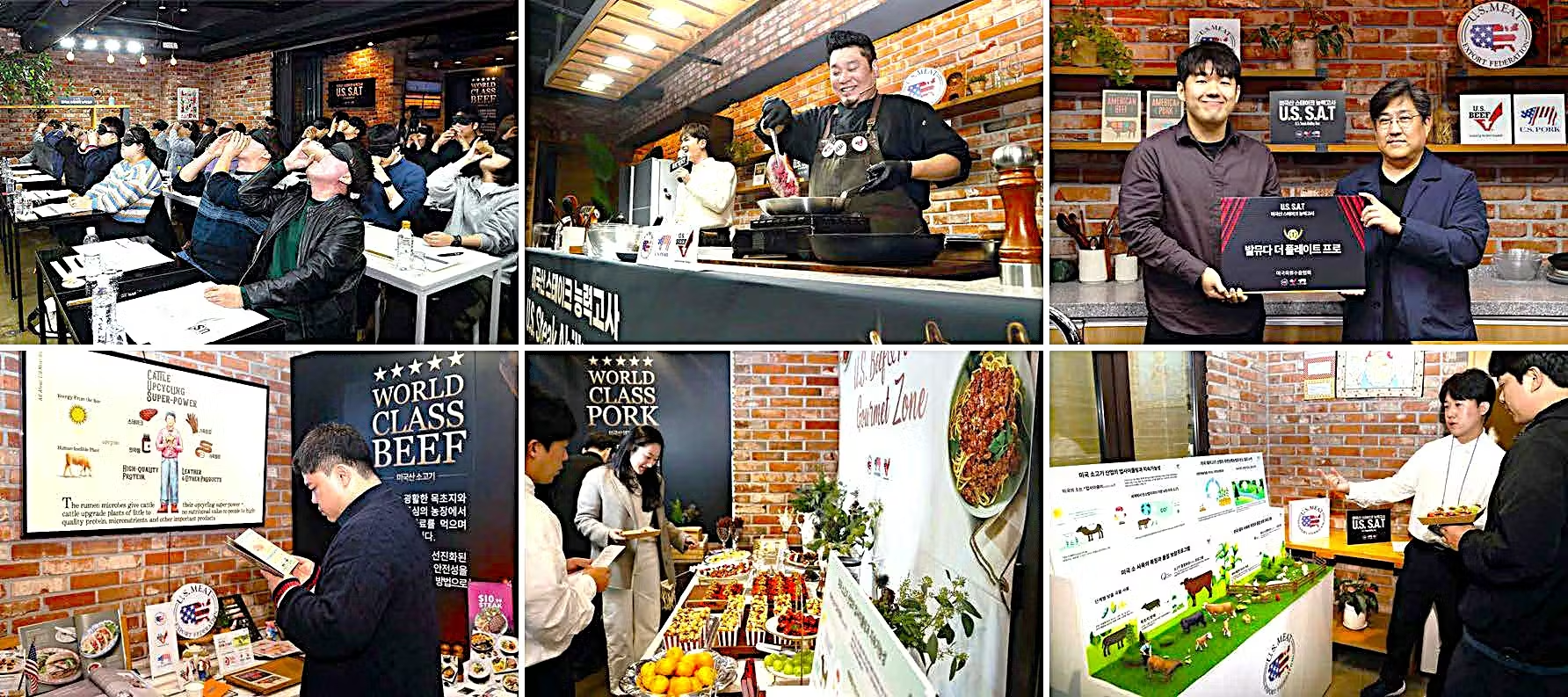
Beef exports have been nothing short of fantastic. “2022 was a ground-breaking year for U.S. beef’s international presence, with global demand stronger than I’ve seen in all my years in the industry,” said U.S. Meat Export Federation President and CEO Dan Halstrom.
The beef export market did slow in December, with volume down 7% and value down 21%. A main contributor was China’s zero-COVID policies, which caused 34% declines in both value and volume to the country.
Despite the weaker December, Halstrom struck a positive chord. “The long list of countries in which records were set showcases the industry’s focus on diversifying export markets,” Halstrom said. “While the year ahead will be challenging due to supply constraints, the exchange rate situation has improved, and we still see room for growth in the foodservice sector as more regions continue their gradual rebound from COVID.”
With short domestic supplies, we can also expect to see beef imports grow. Remember, most of the beef we consume is ground beef, and if reduced fed and cow slaughter are in the forecast, beef will be imported. It shouldn’t have any impact on the markets because global demand is good; we understand that China is ready to allow Australian beef to start entering the country due to political disputes. What effect will this have on the market?
Change is constant and the market always moves to the highest value. I don’t know about you all, but I’ve had just about enough winter. But keep praying for spring rains. — PETE CROW